Rice is more than a side dish in the Philippines. It is the center of the table, the backbone of everyday meals, and a symbol of comfort, hospitality, and abundance. Across the archipelago, rice appears in savory breakfast plates, soothing porridges, festive desserts, and steamed cakes sold in markets and bakeries. To understand Filipino food culture, one must first understand how rice moves through the day, from morning fried rice to afternoon snacks like puto.
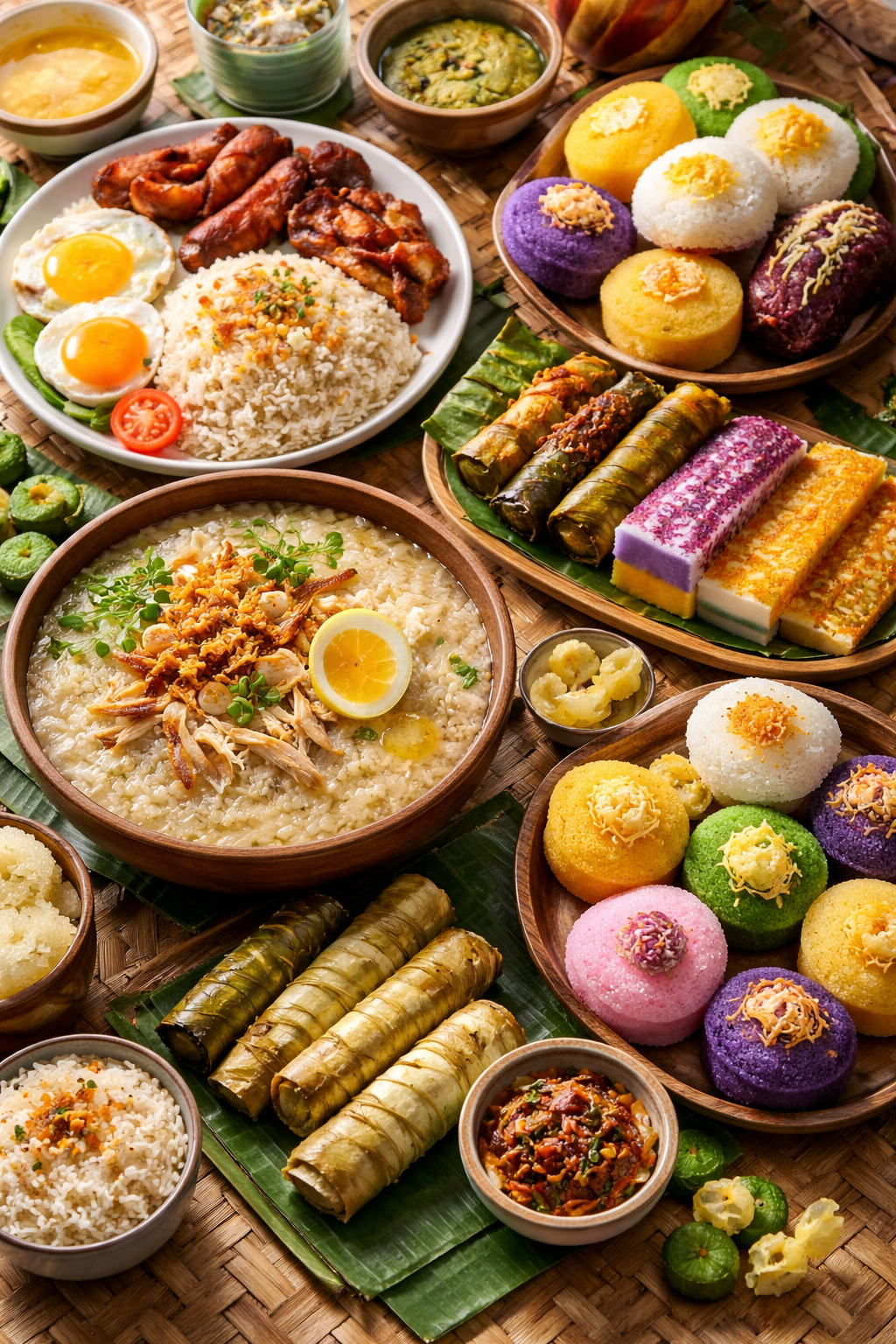
One of the best-known rice dishes in the Philippines is sinangag, or Filipino garlic fried rice. It is usually made from leftover rice, called bahaw, because day-old grains are drier and separate more easily in the pan. The rice is sautéed with plenty of garlic, oil, and a little salt, producing a fragrant dish that is simple but deeply satisfying. Sinangag is often served as part of traditional breakfast combinations such as tapsilog, tocilog, or longsilog, where it accompanies cured beef, sweet pork, or local sausage along with a fried egg. This breakfast style reveals an important Filipino cooking principle: even humble ingredients can become delicious through careful handling and balance.
Rice also appears in softer, more comforting forms. Lugaw is a basic rice porridge made by cooking rice in plenty of water or broth until the grains soften and break down. From this base come richer versions such as goto, which includes beef tripe, and arroz caldo, a chicken porridge flavored with ginger, garlic, and often safflower for color. These dishes are common during rainy weather, illness, or late-night cravings because they are gentle on the stomach and easy to digest. At the same time, they are full of flavor, especially when topped with fried garlic, scallions, calamansi, fish sauce, or boiled egg.
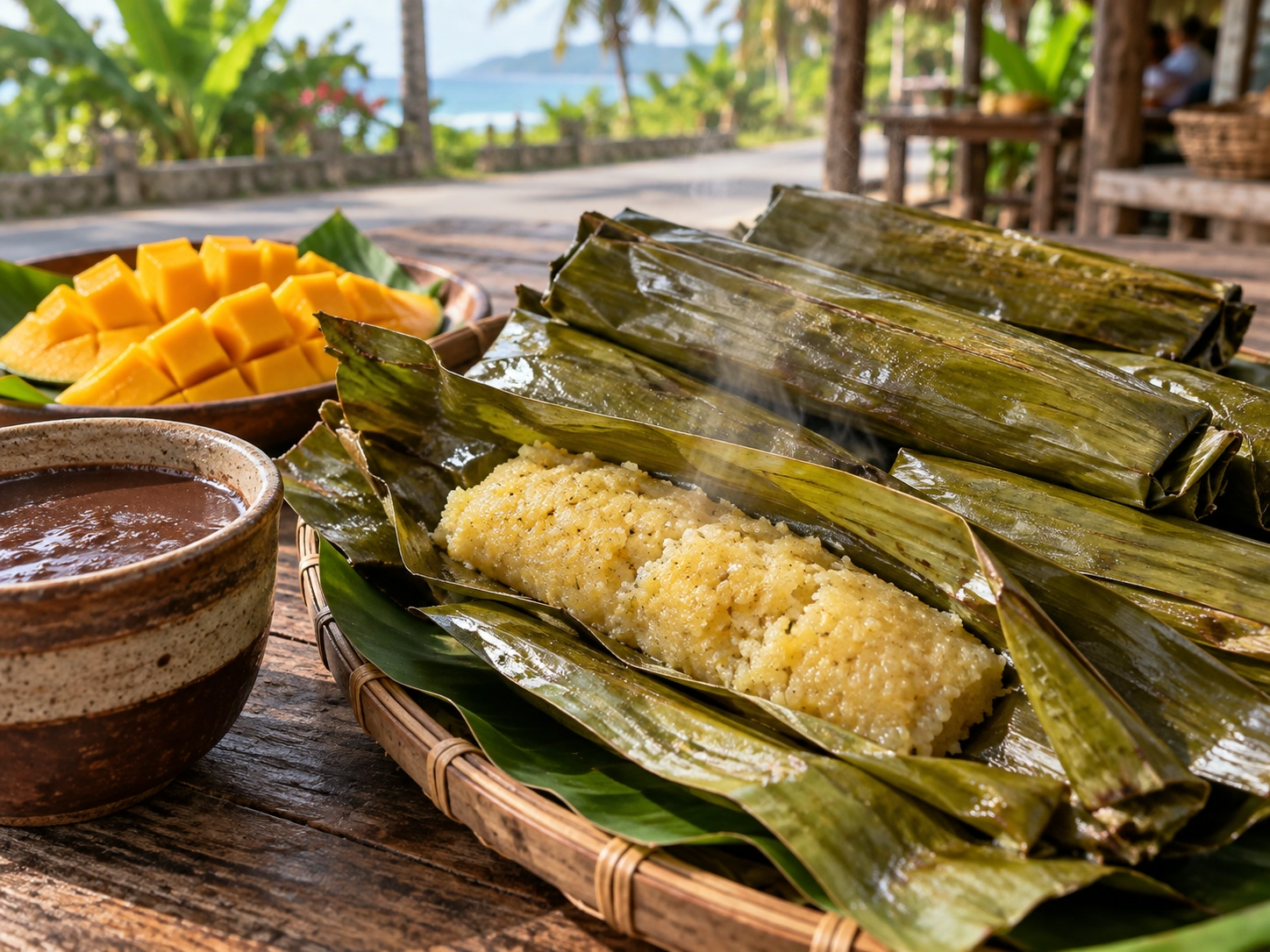
Beyond main meals, rice plays an essential role in Filipino snacks and sweets known as kakanin. These are often made from glutinous rice or rice flour and are closely connected to local traditions. Biko, for example, combines sticky rice, coconut milk, and brown sugar into a dense, glossy dessert often topped with caramelized coconut syrup. Suman is another favorite, made from glutinous rice cooked in coconut milk and wrapped in banana leaves or palm leaves. These delicacies show how rice is adapted not only for nourishment but also for celebration.
Among the most beloved rice-based snacks is puto, a steamed cake traditionally made from rice flour or ground soaked rice. Puto is light, slightly sweet, and airy, with a texture very different from baked Western cakes. It comes in many forms: plain white puto, cheese-topped versions, pandan-flavored varieties, and regional specialties with distinct shapes and ingredients. Some recipes use fermentation or resting time to develop flavor and softness, while modern home cooks may use quicker methods with baking powder. Puto is commonly eaten during merienda, paired with coffee or hot chocolate, and is also famously served with savory dishes such as dinuguan.
What makes Filipino rice cuisine remarkable is its range. The same staple ingredient can be crisp and aromatic in sinangag, silky in lugaw, sticky in kakanin, or fluffy in puto. This versatility reflects the diversity of Filipino food itself, shaped by local agriculture, trade, family tradition, and regional taste. From everyday breakfasts to festive gatherings, rice remains at the heart of Filipino culinary identity.
About the Author