Dental health in the Philippines is closely linked to broader issues in the national health system: income inequality, geography, and education. While the country has a mix of public and private dental services, access is far from equal. Many Filipinos still see oral health as secondary to “more serious” illnesses, which means dental problems are often addressed only when they become painful or disabling.
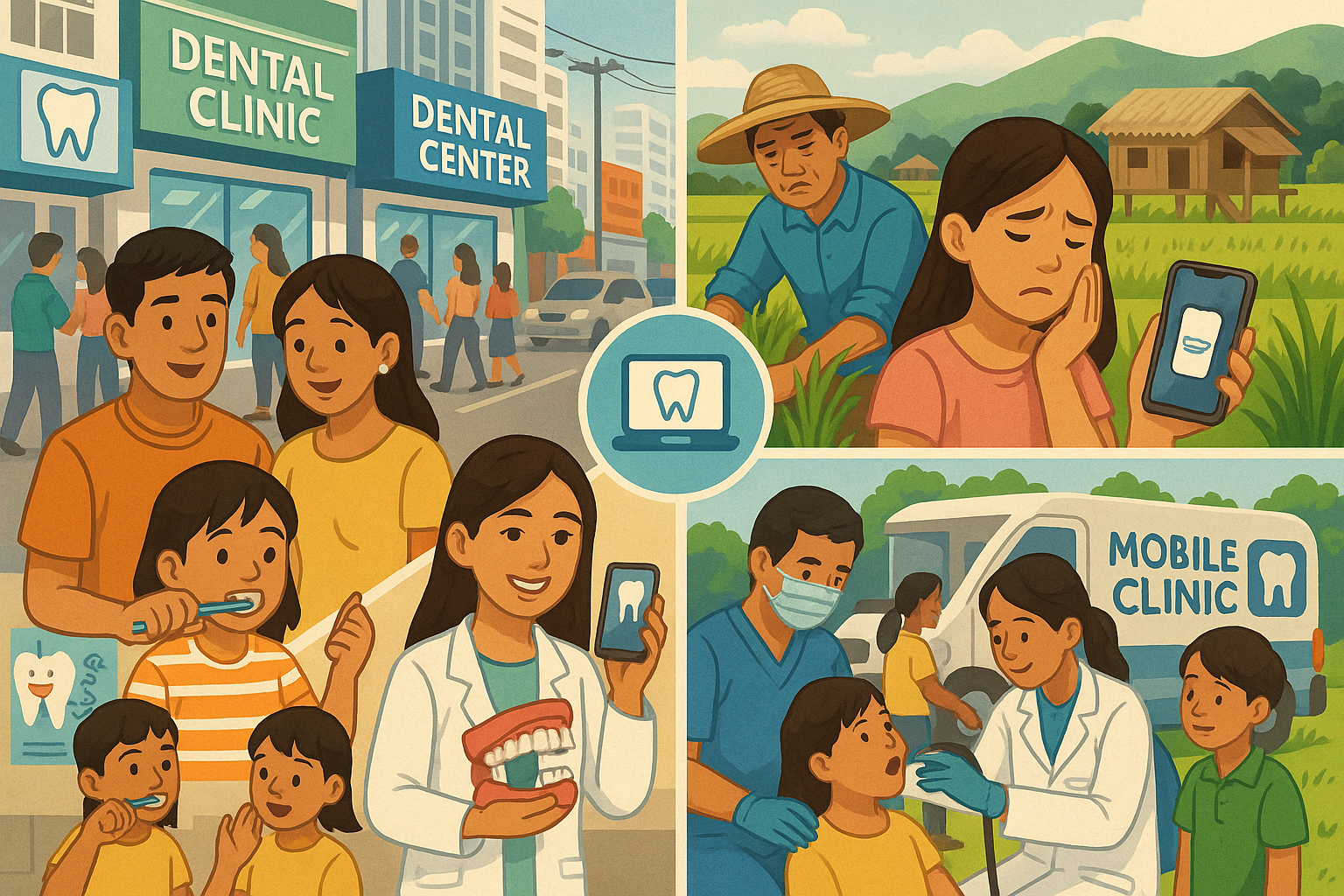
In urban centers like Metro Manila or Cebu City, residents have access to private dental clinics offering a wide range of services—from basic fillings to orthodontics and cosmetic procedures. However, these services are often expensive relative to the average income. Public hospitals and health centers do provide dental care, but the number of dentists, available equipment, and supplies can be limited. As a result, waiting times are long, and the range of treatments may be restricted to basic extractions and simple procedures.
The situation is more challenging in rural and remote areas. Some communities have no resident dentist at all, forcing people to travel long distances for care. Transportation costs, time away from work, and lack of information further discourage regular check-ups. For many families, dental visits are reserved only for emergencies, such as severe toothache or infection. Preventive care—like routine cleaning or fluoride treatments—remains a luxury rather than a norm.
Financial barriers play a major role. Public health insurance covers some dental procedures, but usually not the full spectrum of services people need over a lifetime. Private insurance that includes comprehensive dental benefits is more common among those employed in formal sectors or higher-paying jobs, leaving informal workers and low-income households dependent on out-of-pocket payments. This reinforces a cycle in which people delay care until the problem is advanced, which often leads to tooth extraction instead of restoration.
Awareness and education are equally important. Many Filipinos are familiar with the basics—brushing twice a day and avoiding too many sweets—but practical habits do not always follow. Busy schedules, limited access to toothbrushes or fluoride toothpaste in poorer communities, and the popularity of sugary snacks and drinks contribute to high rates of cavities, especially in children. Parents may not always recognize early signs of dental decay, assuming that baby teeth are “not that important” because they will eventually fall out.
Schools, health workers, and local governments are key players in improving awareness. Some schools integrate tooth-brushing drills, oral health talks, and periodic dental check-ups into their programs. Community health workers, when properly supported, can educate families about basic oral hygiene and the importance of early prevention. Non-governmental organizations also organize dental missions, bringing volunteer dentists to underserved areas for short-term outreach.
Looking forward, strengthening dental health care in the Philippines will depend on several factors: increasing the number and distribution of dentists, expanding affordable coverage for preventive and restorative care, and making oral health education a visible and continuous part of community life. When oral health is treated as an essential component of overall well-being rather than an afterthought, Filipinos will be better equipped to maintain healthy smiles throughout their lives.
About the Author