Filipino cuisine is a significant part of the culture, deeply intertwined with the country’s festivals and celebrations. Each region of the Philippines offers unique flavors, and many of these culinary delights come to life during festivals, representing both cultural pride and the joyful spirit of the Filipino people. From savory dishes to sweet treats, food plays an essential role in bringing people together, symbolizing gratitude, prosperity, and unity.
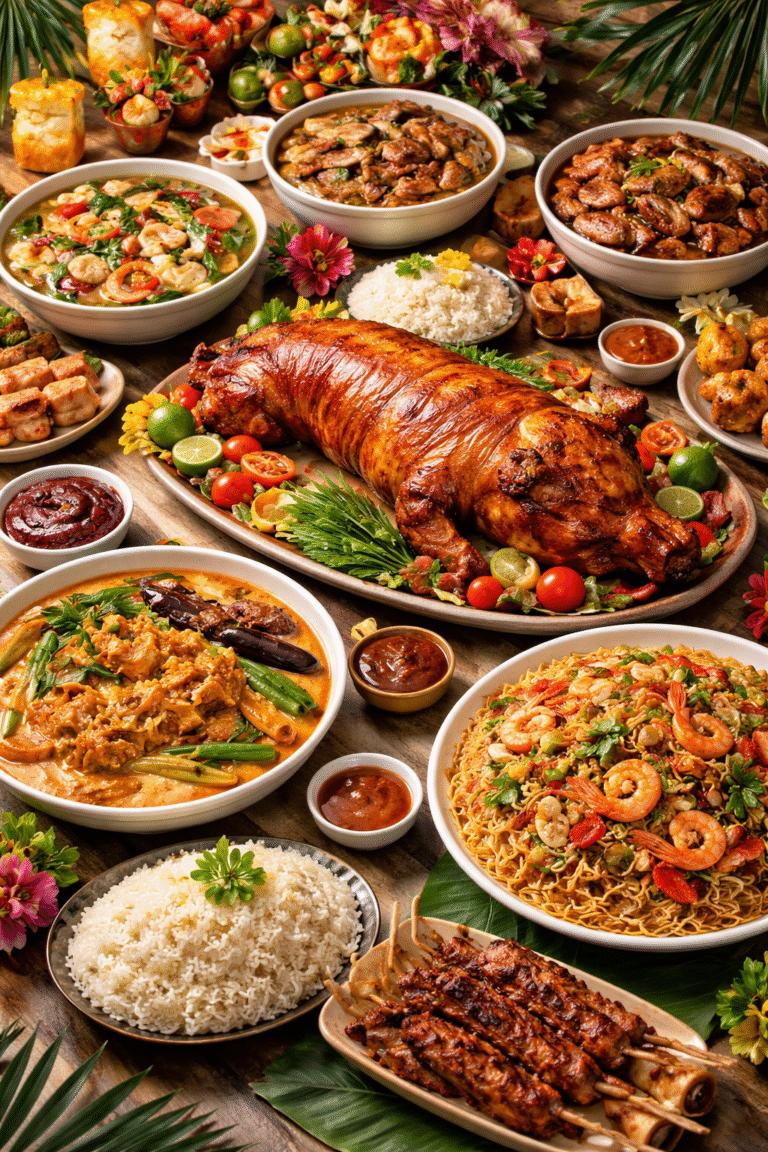
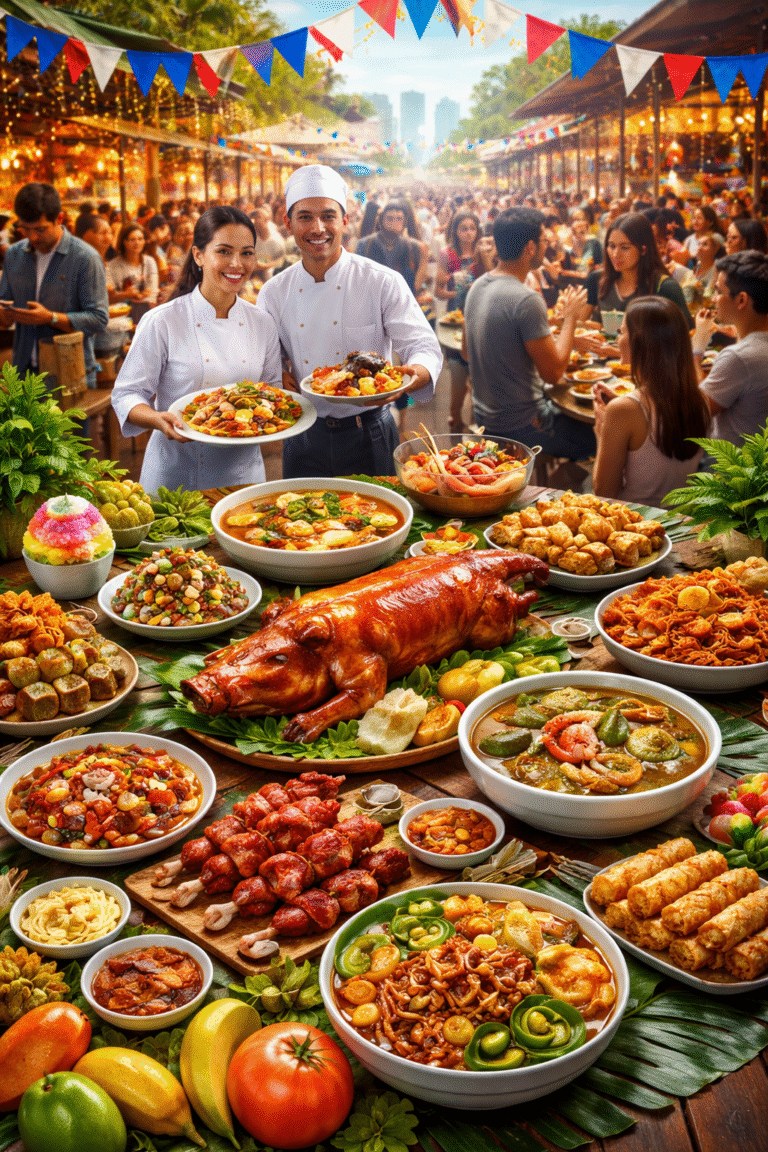
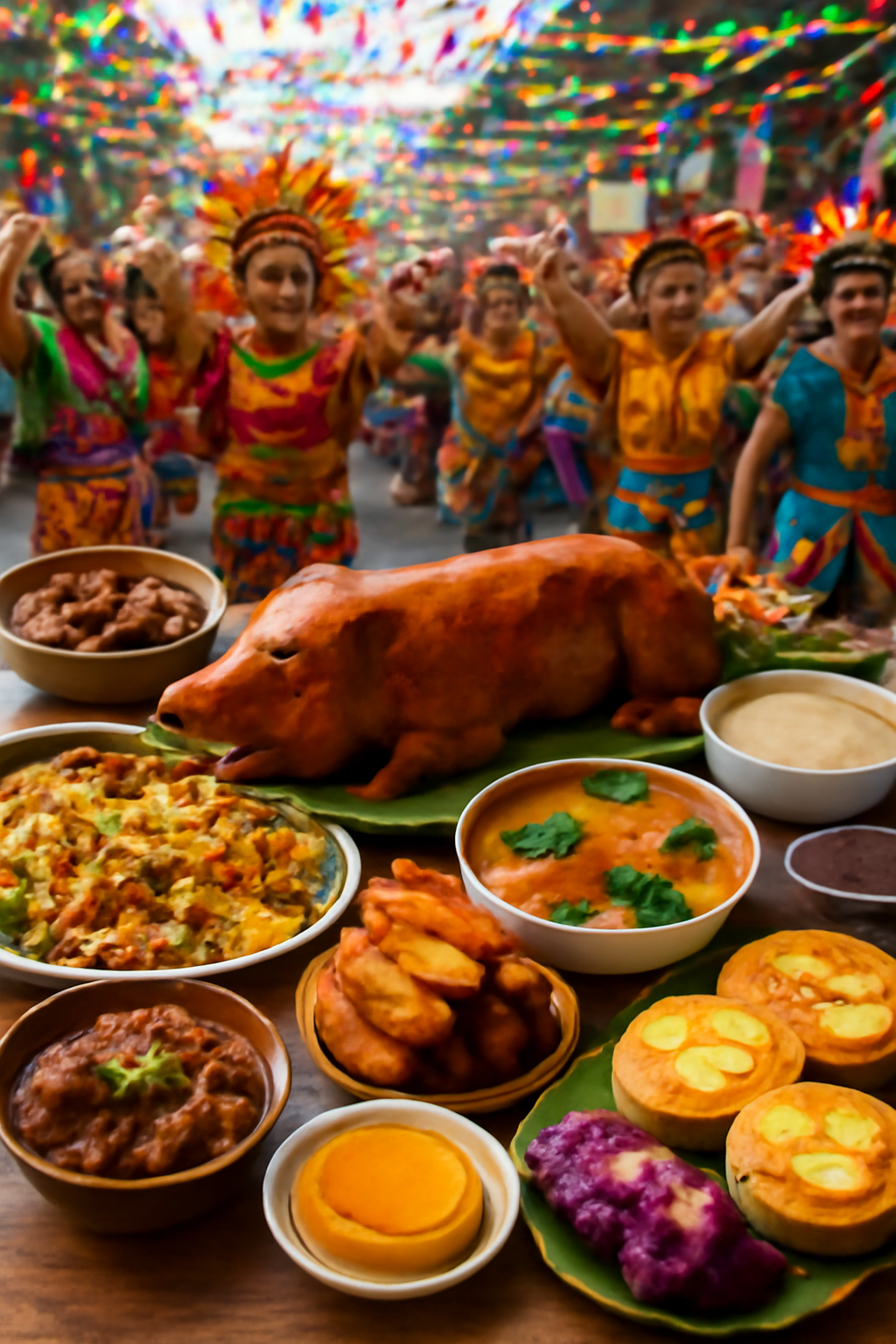
One of the most notable dishes that appears during Filipino festivals is Lechon. This whole roasted pig is often the centerpiece of celebrations, particularly during Christmas, weddings, and large community gatherings. The preparation of Lechon is an art form, with the pig seasoned with herbs and spices before being slowly roasted over an open flame for several hours. Its crispy skin and tender meat make it a crowd favorite. The tradition of serving Lechon goes back centuries, rooted in Spanish colonial influence, yet it has become a quintessential part of Filipino culinary tradition.
Another widely loved dish during festivals is Pancit, a noodle dish that symbolizes long life and good health. Different regions in the Philippines have their variations of Pancit, such as Pancit Malabon (with thick noodles and a seafood-based sauce), Pancit Bihon (thin rice noodles stir-fried with pork, chicken, and vegetables), and Pancit Canton (egg noodles with soy-based sauce). Regardless of the variant, Pancit is typically served during birthdays, New Year’s celebrations, and various festivals, underscoring the Filipino belief that noodles bring good luck and long life.
During Sinulog, a famous festival in Cebu, the culinary delights are abundant, with street food being a major highlight. People flock to the streets to partake in various delicacies, including Banana Cue, which is deep-fried caramelized bananas, and Adobo, a savory dish made with marinated pork or chicken in soy sauce, vinegar, garlic, and spices. The festival is a true celebration of Filipino culture, with food playing a central role in both the religious and community aspects of the event.
Similarly, Kare-Kare, a rich and creamy peanut-based stew, is often served during festivals like Fiesta in various towns. It is made with oxtail, tripe, and a mix of vegetables such as eggplant, banana hearts, and string beans. The dish is often paired with Bagoong (fermented shrimp paste) to enhance its flavor, and it’s typically enjoyed with a group, reflecting the Filipino culture of sharing and communal eating.
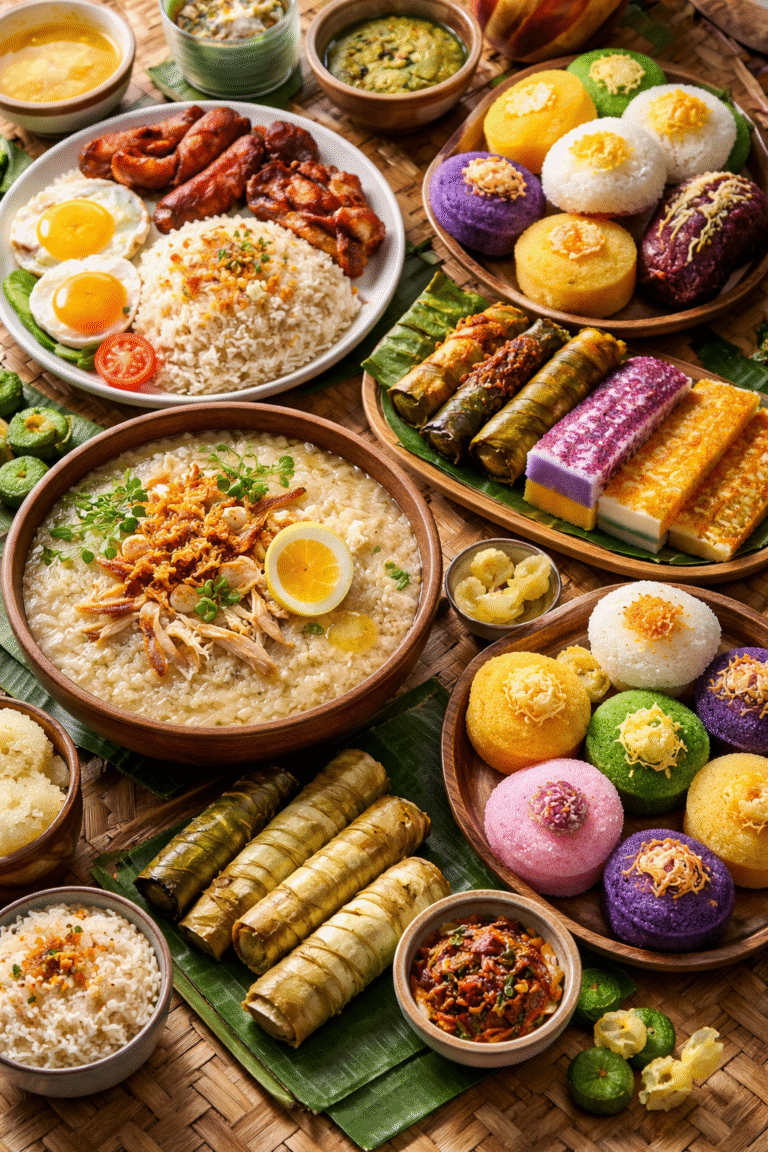
Sweet treats are also an essential part of Filipino festival cuisine. For instance, Bibingka, a rice cake made with rice flour and coconut milk, is commonly served during Christmas, especially after attending the “Simbang Gabi” (night mass). Puto Bumbong, a purple rice cake steamed in bamboo tubes, is another popular snack during Christmas and other local festivals. These treats highlight the Filipino love for rice-based sweets, often made with coconut, sugar, and other local ingredients, adding a rich layer of tradition to festive tables.
Throughout the Philippines, Leche Flan, a rich caramel custard, is a favorite dessert during any festive occasion. The dish, influenced by Spanish cuisine, is often served after hearty meals, offering a sweet and creamy end to a celebratory feast. Its smooth texture and sweet flavor make it a beloved dish in Filipino culture, whether at weddings, birthdays, or religious festivals.
The role of food in Filipino festivals extends beyond just filling the stomach; it’s a way of expressing gratitude, honoring traditions, and celebrating life. During festivals, food brings together families, friends, and entire communities to share in the joy and abundance that these events bring. Each dish tells a story of heritage, regional influence, and the Filipino sense of hospitality and togetherness.
Filipino festivals, with their vibrant traditions, lively music, and, of course, delicious food, offer an immersive experience into the heart of the Philippines. Whether it’s the Lechon that graces the table or the Pancit that brings good fortune, Filipino cuisine is an inseparable part of the celebration and the cultural identity that defines the nation.
About the Author