Traditional entertainment in the Philippines is far more than a source of amusement. It is a living record of how communities remember their history, celebrate local identity, and pass values from one generation to the next. Across the archipelago, performances have long combined storytelling, music, gesture, costume, and dance. Many of these forms developed from indigenous ritual practices, while others were shaped by centuries of trade, migration, and colonial influence. As a result, Filipino entertainment traditions reveal a rich blend of native, Asian, Islamic, and Hispanic cultural layers.
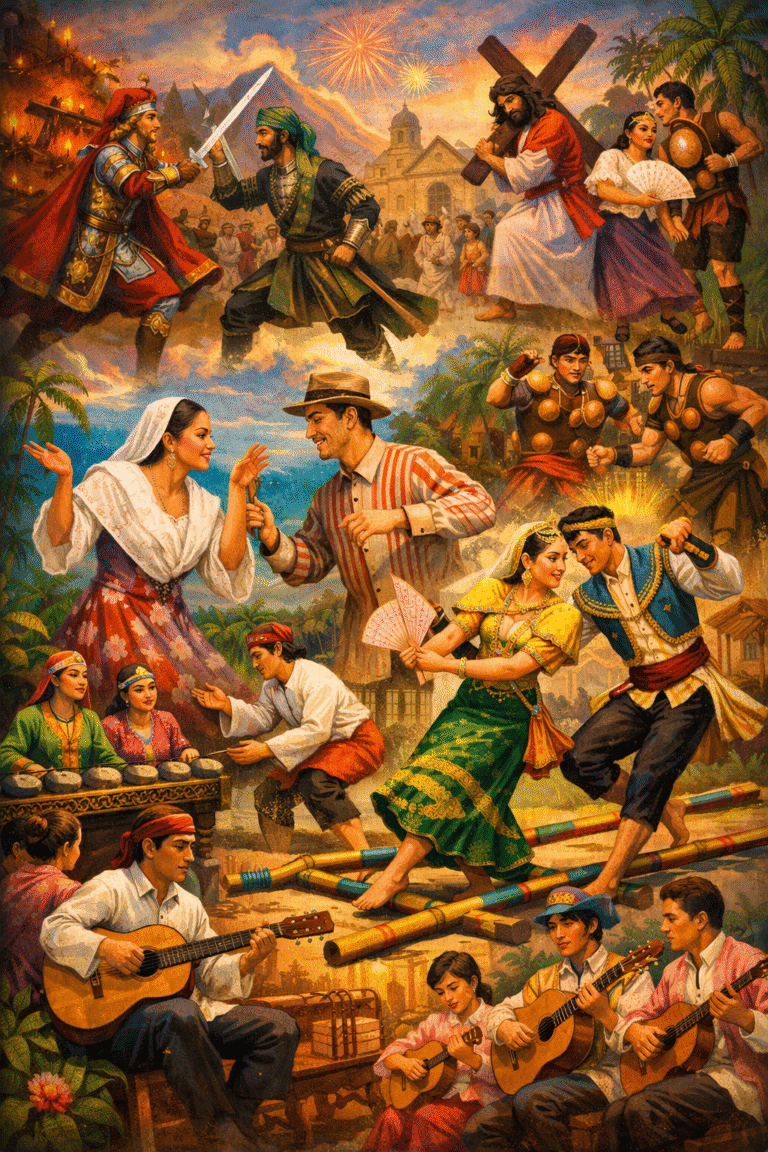
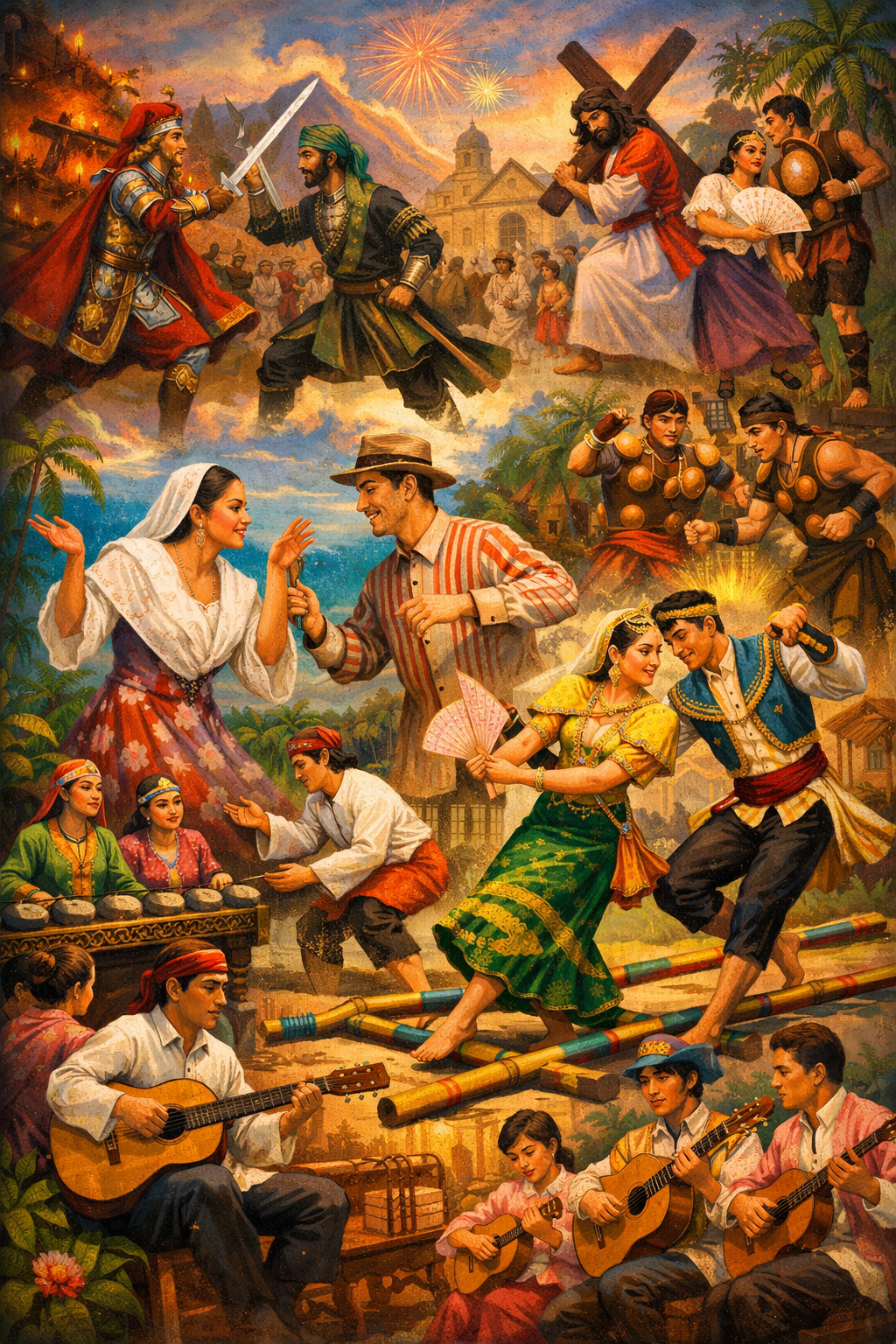
One of the most fascinating aspects of Filipino performance is the use of pantomimic or gesture-based storytelling. In many rural celebrations, performers communicate emotion and narrative through body language rather than long spoken dialogue. Courtship, humor, rivalry, and devotion are often shown through exaggerated movements, playful teasing, and symbolic action. A notable example is Pantomina, a folk dance from the Bicol region. Its name is often associated with “pantomime” because the dance dramatizes the movements of a courting pair, often compared to doves. Rather than relying on complex speech, the performance tells a recognizable story through posture, glances, hand motion, and footwork. This kind of visual storytelling makes the performance easy for entire communities to understand and enjoy.
Traditional theater also plays an important role in Filipino entertainment. The komedya, sometimes called moro-moro, became popular during the Spanish colonial era. It features dramatic battles, royal characters, colorful costumes, and stylized acting. Though theatrical and sometimes exaggerated, it served as a major form of public spectacle in many towns. Another important tradition is the senakulo, a religious dramatic reenactment of the Passion of Christ performed during Holy Week. While spiritual in purpose, it also became a major communal event involving actors, musicians, stage makers, and local audiences. These forms show how performance in the Philippines often blends devotion, education, and entertainment.
Music is inseparable from these traditions. In some parts of Mindanao, the kulintang ensemble provides rhythmic and melodic accompaniment for ceremonies and social gatherings. This gong-based musical tradition is especially important among Muslim and indigenous communities in the south. In many lowland areas, the rondalla, made up of plucked string instruments, became a common partner to folk dances and stage performances. Music does not simply support the show; it shapes mood, rhythm, and interaction between performers and viewers.
Dance is perhaps the most widely recognized form of Philippine traditional entertainment. Tinikling, with its rapid footwork between moving bamboo poles, reflects agility and precision. Cariñosa is known for its gentle courtship theme and graceful use of fans or handkerchiefs. Singkil, linked to the Maranao people, presents elegance, nobility, and control as the dancer moves through clashing bamboo poles while wearing regal costume. Other dances such as Maglalatik, Subli, and Sayaw sa Bangko reveal how Filipino communities transformed everyday life, faith, and local experience into performance.
Today, these traditions remain visible in festivals, school programs, cultural showcases, and regional celebrations. They continue to entertain, but they also protect memory. Every gesture, beat, and costume carries traces of the communities that created them. Through pantomime, theater, music, and dance, traditional Filipino entertainment offers a vivid picture of the nation’s creativity and cultural depth.
About the Author