Fashion in the Philippines has undergone significant transformations over the years, mirroring both the socio-cultural developments and global trends. Men’s fashion in the country has evolved from humble, simple attire to a more varied and sophisticated expression of personal style, balancing both casual and formal wear. This evolution reflects changes in social status, lifestyle, and cultural influences from different parts of the world.
Early Trends: Traditional Filipino Wear
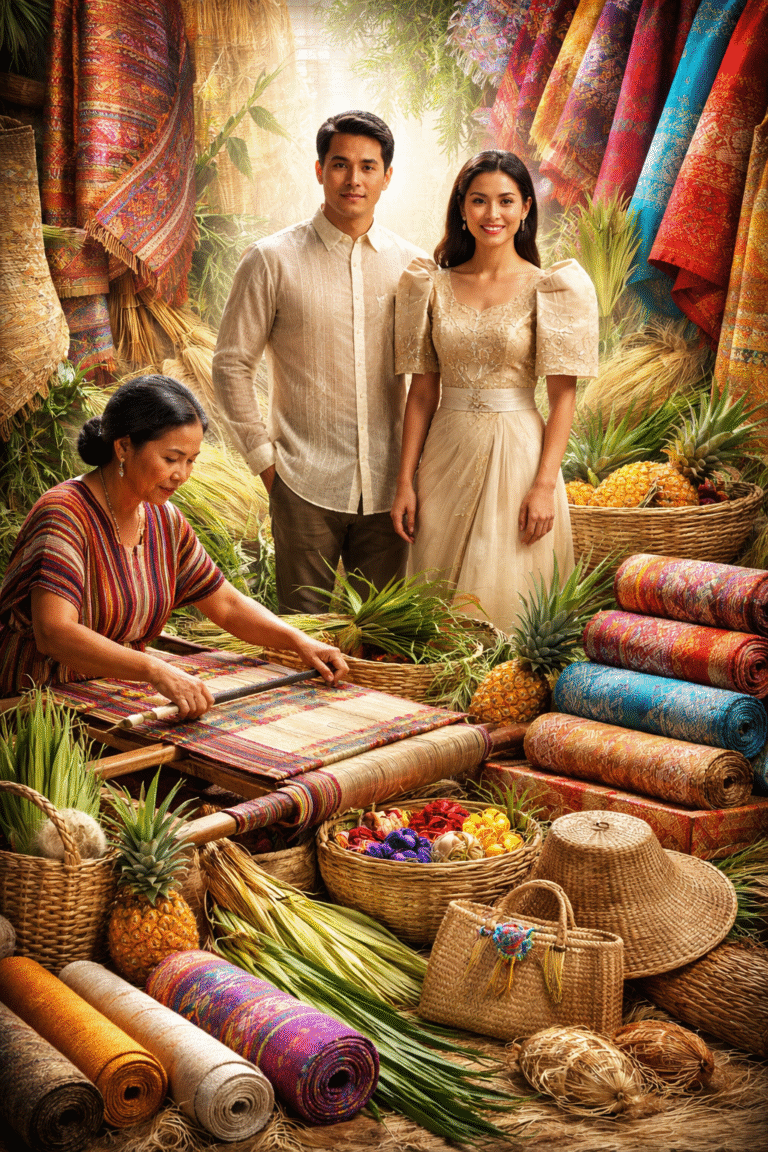
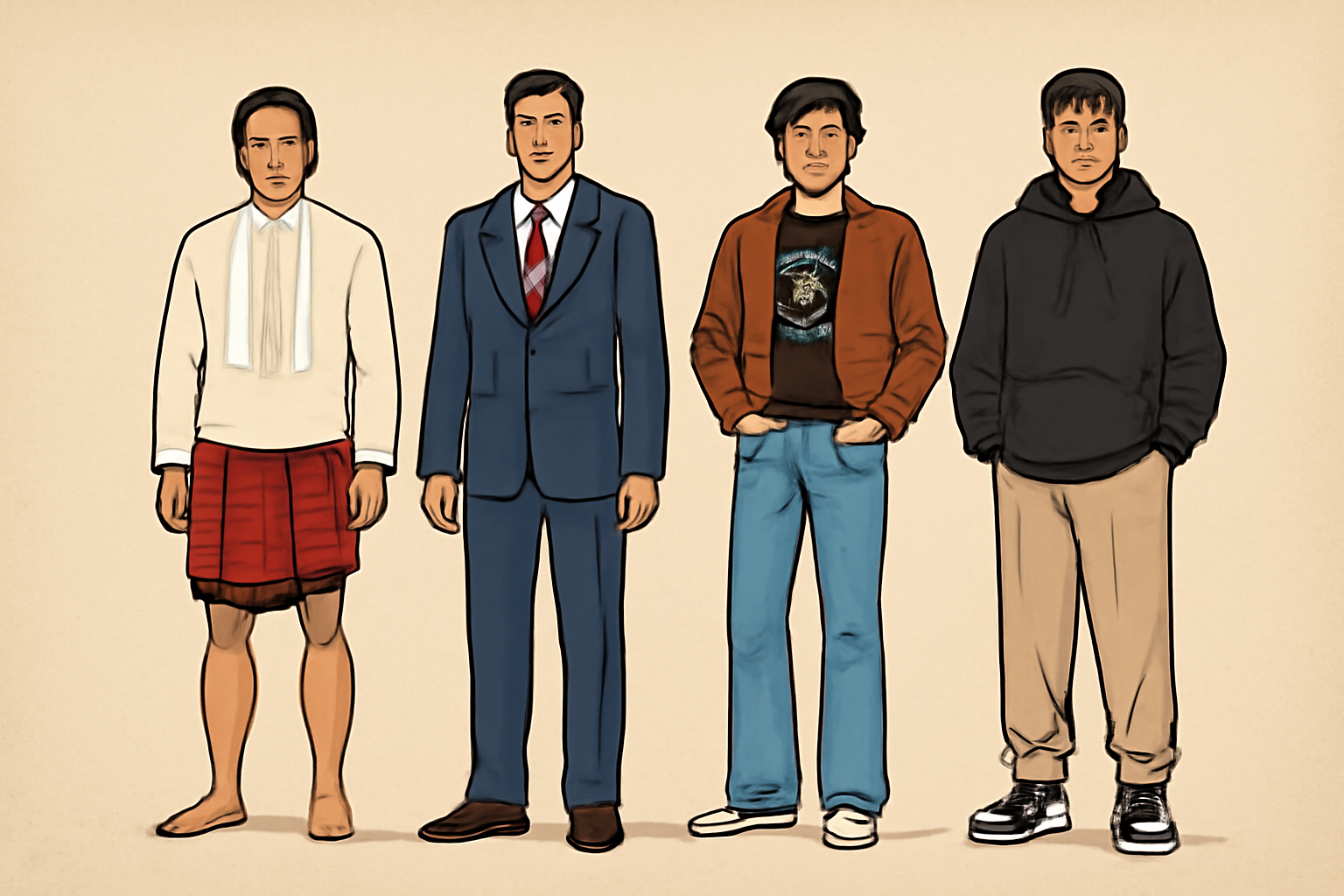
Historically, traditional Filipino attire for men was designed for practicality, as well as for reflecting the country’s identity and local culture. Before Spanish colonization, Filipino men wore basic garments like the “bahag” (loincloth) and “camisa de chino” (loose shirts). The Spanish influence in the 16th century introduced the “barong Tagalog,” a lightweight, embroidered shirt made from natural fibers like piña or jusi. The barong became a staple for formal occasions, symbolizing elegance and national pride.
The Rise of Western Influence
The early 20th century marked a significant turning point for Filipino men’s fashion, as the Philippines was under American rule. The Western influence brought with it a more modern and casual style, which led to the introduction of suits, trousers, and dress shirts. For the first time, Filipino men began to adopt styles like tailored suits, neckties, and hats, which were previously reserved for elite classes or foreigners. The shift toward Western-inspired fashion was a sign of modernization and social status. The suit, especially, became a symbol of prestige, worn during significant events like weddings, formal dinners, and political gatherings.
Post-War Fashion: Casual Meets Formal
The post-war era witnessed a blend of casual and formal styles, largely influenced by global trends. The rise of the middle class in the Philippines during the 1950s and 1960s led to a broader acceptance of stylish yet functional attire. Filipino men began wearing more comfortable clothing, such as polo shirts, slacks, and khakis, while maintaining a sharp sense of style. Suits and barongs were still worn for special occasions, but casual dress became increasingly common in daily life.
The 1970s and 1980s saw an influx of global fashion, with men in the Philippines embracing trends from the West. Popular fashion items included bell-bottom trousers, denim jeans, and leather jackets, influenced by the popularity of rock ‘n roll and American pop culture. At the same time, the barong Tagalog remained a key garment for formal events, preserving its traditional role in Filipino society.
Modern-Day Fashion: A Fusion of Casual and Formal
In recent years, men’s fashion in the Philippines has been marked by a hybrid of casual and formal elements. The younger generation, in particular, has embraced streetwear, blending relaxed, comfortable styles with more polished, sophisticated pieces. This fusion is evident in how men now pair casual T-shirts or hoodies with formal blazers or dress shoes, creating a balance between comfort and elegance.
The modern barong Tagalog has also evolved. Designers have reimagined the traditional garment with contemporary fabrics and streamlined cuts, making it suitable for both formal and semi-formal occasions. As the country continues to embrace a globalized world, Filipino men have found ways to blend international fashion trends with their own heritage, creating a unique style that stands out on the world stage.
Conclusion
Men’s fashion in the Philippines has evolved from the basic garments of the indigenous cultures to the formal, Western-inspired styles of the 20th century and finally to the fusion of casual and formal attire seen today. Throughout this journey, Filipino men have maintained a strong sense of identity while adapting to global fashion trends. The result is a versatile and dynamic fashion scene that reflects the country’s rich cultural heritage and modern influences.
About the Author