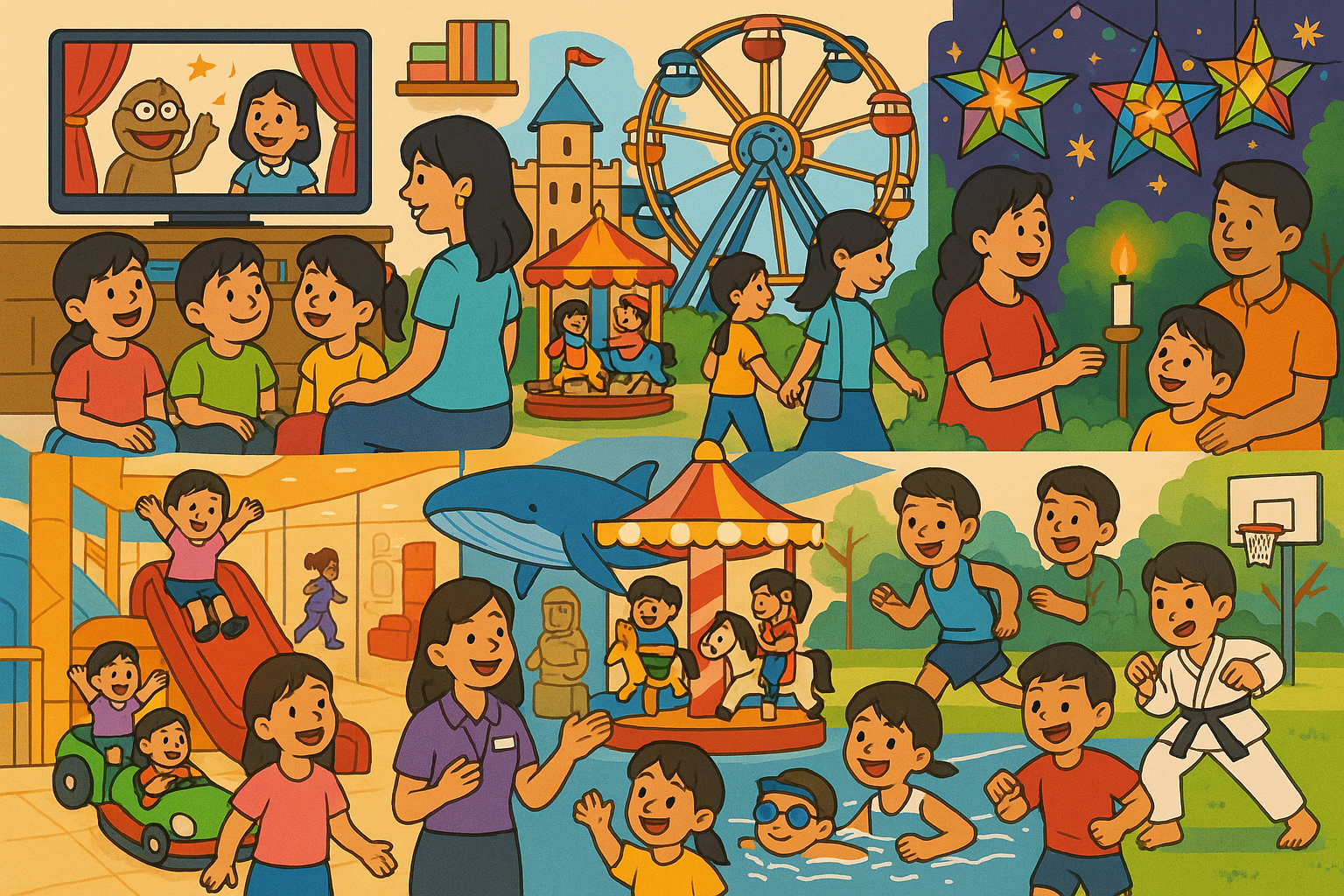
Children’s entertainment in the Philippines is shaped by a strong sense of family, community, and tradition. Whether at home, in shopping malls, or at large festivals, Filipino kids are surrounded by activities and programs that mix fun with learning and cultural values.
One of the biggest influences is television and online programming. Local networks have long produced educational shows for children, such as Sineskwela, Hiraya Manawari, and Bayani, which blend science, history, and values education with storytelling. Although some of these programs are older, they are still remembered and occasionally re-aired or referenced in classrooms. More recent shows, like Team Yey! and locally dubbed foreign cartoons, offer music, crafts, games, and skits that encourage creativity and physical activity.
Digital platforms also play a huge role. Many Filipino children watch content on YouTube and streaming services, from animated series to kid-friendly vlogs. Parents often choose channels that teach English vocabulary, numbers, and moral lessons. This combination of local TV and global online content means children grow up exposed to both Filipino culture and international trends.
Outside the home, theme parks and attractions are major highlights. Enchanted Kingdom in Laguna is one of the most famous family destinations, with kid-friendly rides, parades, and live performances. Star City in Pasay has long been known for its indoor and outdoor rides, making it popular during weekends and holidays. Smaller attractions like Sky Ranch in Tagaytay and Pampanga offer rides that cater specifically to children, from carousels to mini roller coasters.
Shopping malls in the Philippines double as entertainment centers. On weekends, malls frequently host character meet-and-greets, magic shows, singing contests, and interactive games for kids. Many malls feature indoor playgrounds, trampoline parks, and role-playing play cities where children can try “adult” jobs in a fun, miniature setting. Bookstores and toy shops also hold storytelling sessions, art workshops, and board game events to keep young visitors engaged.
Festivals and community events are another cornerstone of children’s entertainment. During town fiestas, children join parades, costume contests, street games, and talent shows. Big festivals like Sinulog in Cebu or Panagbenga in Baguio usually include family zones and child-friendly activities. Christmas, a major celebration in the country, brings endless entertainment: school and church performances, caroling, Christmas light displays, and holiday-themed shows in parks and malls.
School-based events further enrich children’s experiences. Most schools organize yearly fairs, intramural games, drama presentations, and foundation day programs where kids perform dances, songs, and skits. These events are attended by parents and relatives, turning them into extended family gatherings filled with food and informal playtime.
In recent years, cosplay events, anime conventions, and gaming expos have started to include special areas for younger participants. Children dress up as their favorite characters, pose for photos, and join simple contests. This reflects the growing influence of global pop culture while still blending with Filipino family-oriented habits, as parents often participate and supervise.
Altogether, children’s entertainment in the Philippines is not just about keeping kids busy. It weaves together education, culture, faith, and community. From TV screens to festival streets, Filipino children experience a wide range of programs and events that help shape their identities, skills, and social connections.
About the Author