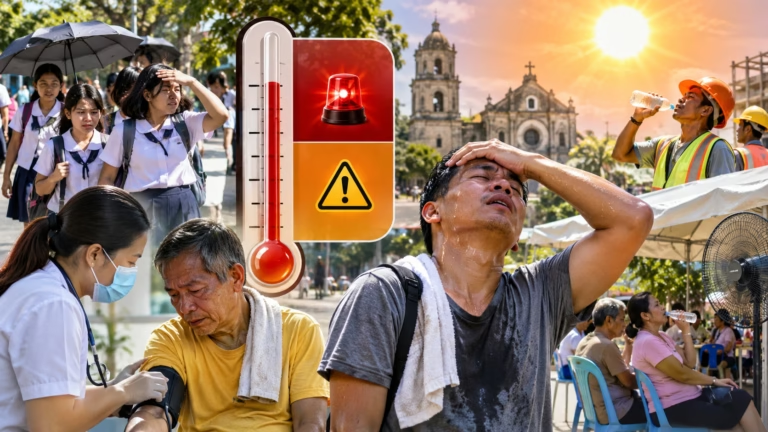
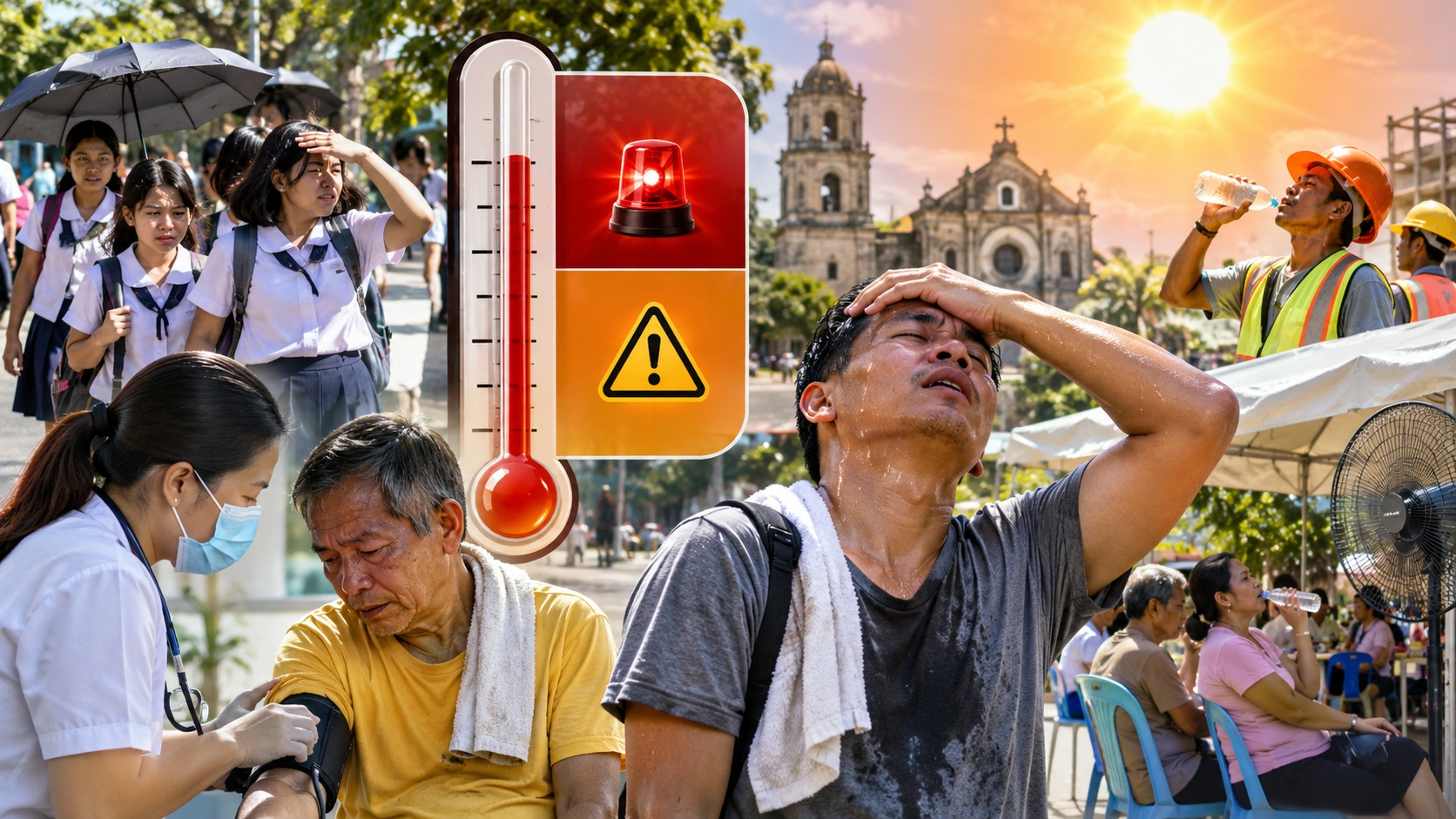
The Philippine Atmospheric, Geophysical and Astronomical Services Administration (PAGASA) does not treat all hot days the same. Its heat index scale draws a clear line between discomfort and danger: 33°C to 41°C falls under “extreme caution,” while 42°C to 51°C is classified as “danger” . That distinction is not academic. At danger-level readings, heat cramps and heat exhaustion are likely, and heat stroke becomes probable with continued exposure .
When the Heat Index Crosses 42°C
In November 2026, PAGASA placed 16 areas under danger-level heat index forecasts, with readings ranging from 42°C to 43°C . Iloilo City recorded the highest forecast in Western Visayas at 43°C, followed by Roxas City at 42°C and two Iloilo municipalities at 40°C . These figures reflect what the body actually feels when humidity is factored in, not merely the air temperature reported by a standard thermometer.
The physiological consequences unfold in stages. Profuse sweating, fatigue, dizziness, and a weakening pulse are early warning signs . As dehydration worsens, the body loses its ability to regulate internal temperature. Muscles begin to twitch, the heart races, and the person may faint . Without immediate cooling and rehydration, the condition can escalate to heat stroke, a life-threatening emergency that can cause multi-organ failure .
A Health System Under Thermal Stress
The Department of Health has repeatedly warned that extreme heat does more than cause exhaustion. It can worsen hypertension, diabetes, and asthma, while increasing the risk of dengue, foodborne illness, and waterborne diseases such as acute gastroenteritis . The DOH’s Western Visayas office has linked heat-related illnesses directly to the El Niño phenomenon and urged the public to recognize early symptoms and seek medical attention promptly .
PAGASA has resumed heat index forecasting as a strong to very strong El Niño is expected to peak before the end of 2026 and persist into the first half of 2027 . Forecasts suggest that heat index levels could exceed 52°C—classified as “extreme danger”—from late February to June 2027 . That projection extends the public health risk well beyond the traditional dry season, complicating preparedness for local governments that have historically treated heat as a seasonal concern.
Why the 42°C Threshold Matters for Local Action
The danger threshold has practical consequences for schools, workplaces, and health facilities. Class suspensions are triggered at danger-level readings in many areas, while the DOH has directed hospitals to maintain cooling stations and clinical guidance for heat-related cases . Yet the response remains fragmented across sectors, and heat is not yet fully embedded as a core hazard in the national disaster risk reduction framework . For communities on the front line, the difference between 41°C and 42°C is the difference between caution and crisis.
About the Author