The Numbers Behind Manila’s Nocturnal Boom
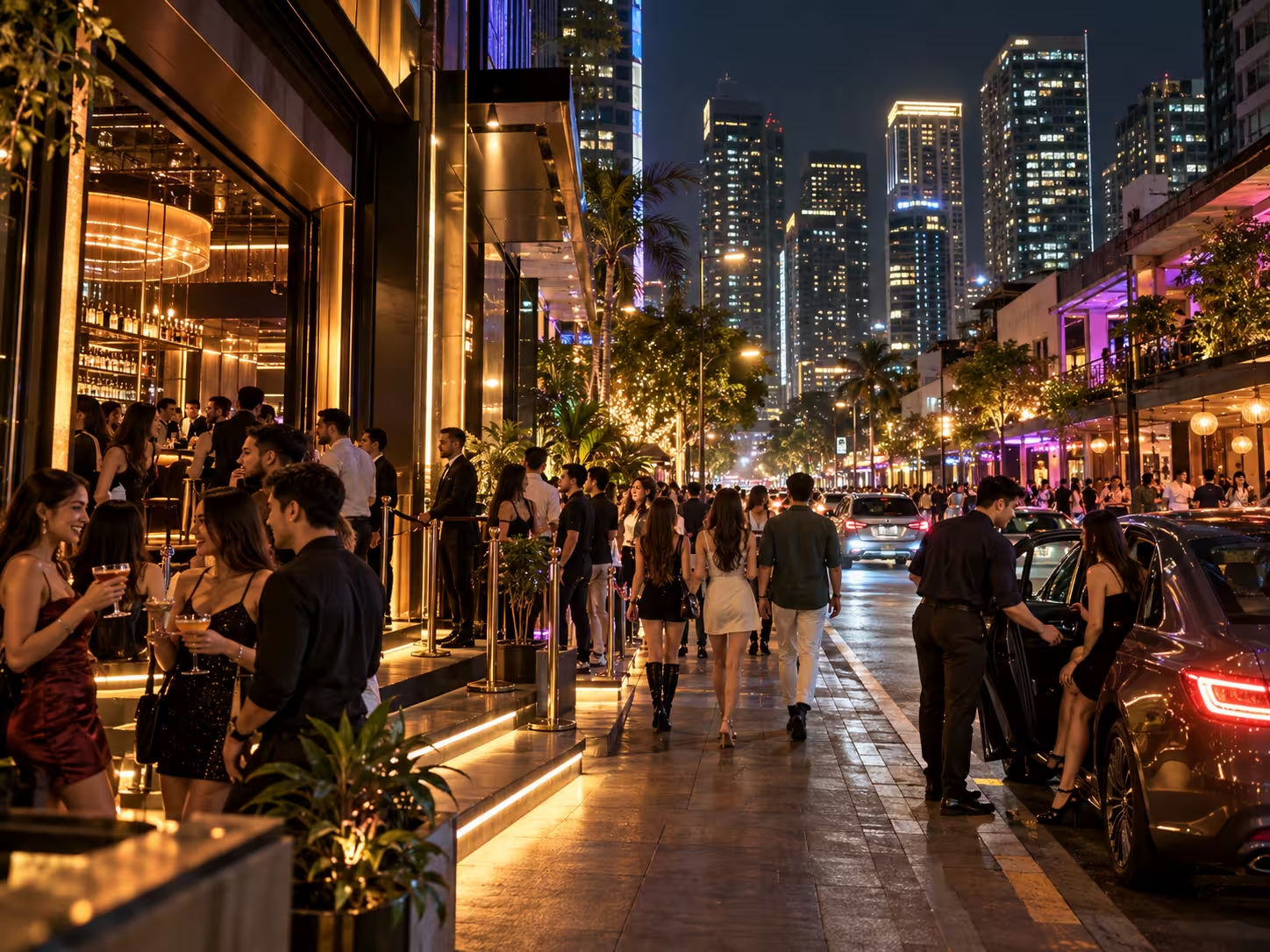
Metro Manila remains the undisputed epicenter of Philippine nightlife, with 370 registered night clubs as of April 1, 2026 — the highest concentration in the country. This figure is part of a broader national landscape of 1,254 night clubs across the Philippines, a 5.25% increase from 2023. The capital’s dominance reflects not just volume but variety: the average age of Philippine night clubs is just two years and ten months, signaling a wave of fresh concepts and venues entering the market.
BGC: The Super-Club Capital
Bonifacio Global City has cemented itself as the address for high-production clubbing. XYLO at The Palace, formerly Valkyrie, remains the benchmark for EDM-driven nights, with door charges ranging from ₱500 to ₱700 and a strict dress code that keeps the crowd polished. Nearby, Clubhouse at The Palace has carved out a niche for vintage-inspired clubbing, blending retro aesthetics with modern sound systems. New entrants like The Iron Fairies Manila, which opened in early 2026, have raised the bar for immersive entertainment — a two-tonne bar, 30,000 handcrafted butterflies suspended from the ceiling, and six private rooms hidden behind cast-iron furnaces. The venue’s cocktail program includes Manila-exclusive creations like the Old Balete (gin, basil, absinthe, guava) and Diwatang Maria (rum, pandan, ube, lime), designed to root the Hong Kong-born concept in local flavor.
Poblacion: The Walkable Heart of Bar Hopping
If BGC is about spectacle, Poblacion is about discovery. This Makati neighborhood rewards those who explore on foot, following the sound of music through its dense grid of bars and clubs. White Banana is widely recommended for its reliable DJ lineup, while OTO pairs craft cocktails with a lively weekend party atmosphere. The Spirits Library offers a more curated experience, with a massive selection of spirits in a space that feels like a hidden archive. The beauty of Poblacion lies in its density: venues start at different hours, some at 9 PM, others at 4 AM, creating a rolling wave of nightlife that can stretch until sunrise.
Safety and the New Regulatory Reality
Manila’s nightlife operates under increasingly strict public order rules. In April 2026, the Department of the Interior and Local Government enforced a ban on public drinking and late-night karaoke past 10 PM in Metro Manila, alongside a curfew for minors. For visitors, the practical implication is straightforward: keep drinks inside licensed venues, carry only what you need, and use ride-hailing apps like Grab for late-night transport. The scene remains vibrant, but the days of open-street revelry are being replaced by a more regulated — and arguably safer — nightlife ecosystem.
Why Manila Remains the Benchmark
No other Philippine city offers the sheer range of Manila’s after-dark options: casino-adjacent lounges in Newport, jazz and soul bars in Forbes Town, and underground listening rooms in Burgos Circle. The capital’s nightlife is not a single scene but a constellation of micro-scenes, each with its own rhythm, crowd, and code. For travelers and locals alike, the challenge is not finding a place to go — it is choosing where to begin.
About the Author