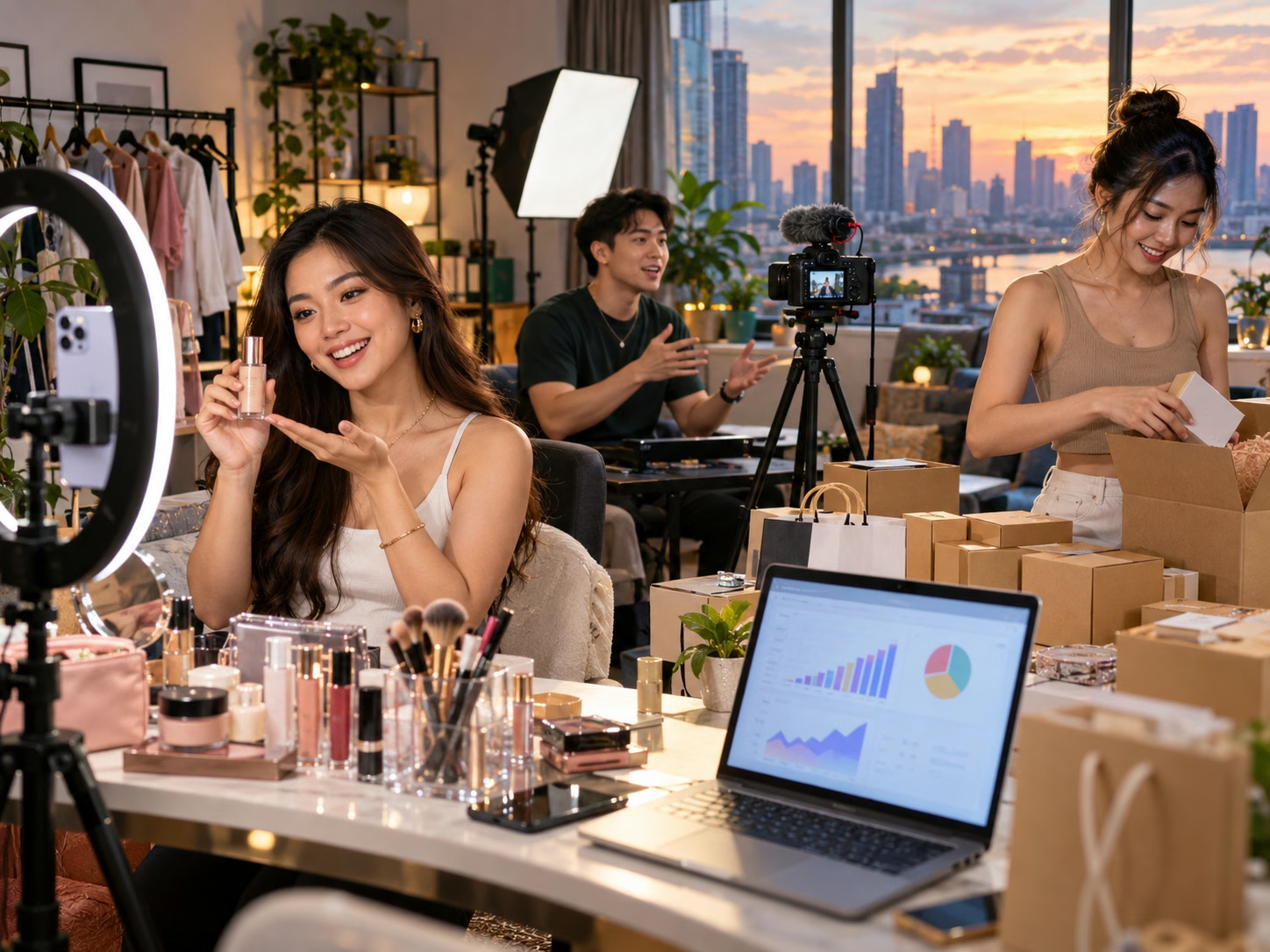
The Philippine entertainment landscape has undergone a seismic shift. The lines between traditional celebrity and digital creator have blurred, giving rise to a powerful new economic force. Influencers and YouTubers are no longer just viral personalities; they are the architects of a multi-billion-peso creative economy that is redefining how Filipinos consume entertainment and how brands connect with audiences.
The Numbers Behind the Boom
The scale of this transformation is staggering. According to the Digital 2026 Philippines Report by Meltwater and We Are Social, the Philippines now counts 98 million internet users, with 95.8 million active social media identities. Filipinos spend over 20 hours per week watching online videos—twice the time spent on broadcast or cable television. This voracious appetite for digital content has turned creators into essential media channels.
The financial implications are profound. The Philippine creative economy expanded to ₱2.12 trillion in 2026, equivalent to 7.6% of the country’s gross domestic product. Within this ecosystem, influencer advertising alone accounts for $125 million in spending, marking a 15% year-on-year increase. These figures underscore a fundamental truth: digital creators are not a niche phenomenon—they are a cornerstone of the national economy.
From Hobbyist to Entrepreneur
The professionalization of content creation has been a defining trend of 2026. TikTok Shop Philippines reported that its active creator base doubled year-on-year, with creators evolving from content producers into business builders and entrepreneurs. This shift is exemplified by creators like Andrea Brillantes, who received the Gen Z CEO Celebrity of the Year award for leveraging livestream commerce to build her beauty brand, Lucky Beauty.
Mimiyuuuh, one of the Philippines’ most recognizable digital personalities, recently revealed how her revenue model has evolved. While YouTube was her primary income source during the pandemic, brand endorsements have since become her main revenue stream. “Mga brand deals na po,” she stated during a television interview, reflecting the broader trend of creators diversifying beyond platform-dependent income.
The Social Commerce Revolution
The integration of entertainment and commerce has created a uniquely Filipino phenomenon. The social commerce market in the Philippines is projected to reach $28.77 billion by 2026, growing at an annual rate of 11.7%. This growth is driven by consumers who discover products through creator recommendations and complete purchases in just a few taps.
Lazada Philippines reported that 88% of Filipino consumers said influencer recommendations affected their purchasing decisions, with Facebook remaining the leading platform for social commerce. This statistic highlights the immense trust audiences place in their favorite creators—a trust that brands are increasingly willing to pay a premium to access.
A Cultural and Economic Force
The impact extends beyond mere transactions. Filipino content creators like Niana Guerrero and Bretman Rock have achieved global recognition, with their inclusion in the 2026 TIME100 Creators list signaling the international reach of Philippine digital talent. These creators serve as cultural ambassadors, showcasing Filipino humor, creativity, and storytelling to audiences worldwide.
The economic potential of this sector has not gone unnoticed by policymakers. The Department of Trade and Industry has positioned the creative economy as a major driver of exports, digital growth, and regional trade, with initiatives like the ASEAN Creative Industries Expo connecting creators with global investors.
As the Philippine entertainment industry continues to evolve, influencers and YouTubers will remain at its forefront—not merely as entertainers, but as economic drivers, cultural ambassadors, and entrepreneurial innovators shaping the future of Filipino media.
About the Author