Mental health care in the Philippines has become easier to navigate, but many Filipinos still do not know where to begin. Public facilities, community health programs, and crisis lines now offer multiple entry points under Republic Act No. 11036, the Philippine Mental Health Act. Understanding how these services operate in 2026 can shorten the path from distress to treatment.
Public Mental Health Facilities That Accept Walk-Ins
The National Center for Mental Health (NCMH) in Mandaluyong is the country’s largest psychiatric hospital. It operates emergency services, adult and pediatric outpatient departments, and a drug rehabilitation unit. In Manila, the Philippine General Hospital’s Department of Psychiatry and Behavioral Medicine provides consultation, psychotherapy, and inpatient care for severe cases. Outside the capital, DOH-retained hospitals in Cebu, Davao, and Baguio have expanded psychiatric wards. According to the Department of Health, accessible at https://doh.gov.ph/ (accessed April 2026), mental health services have been integrated into many provincial and district hospitals.
Preparing for a Public Psychiatric Consultation
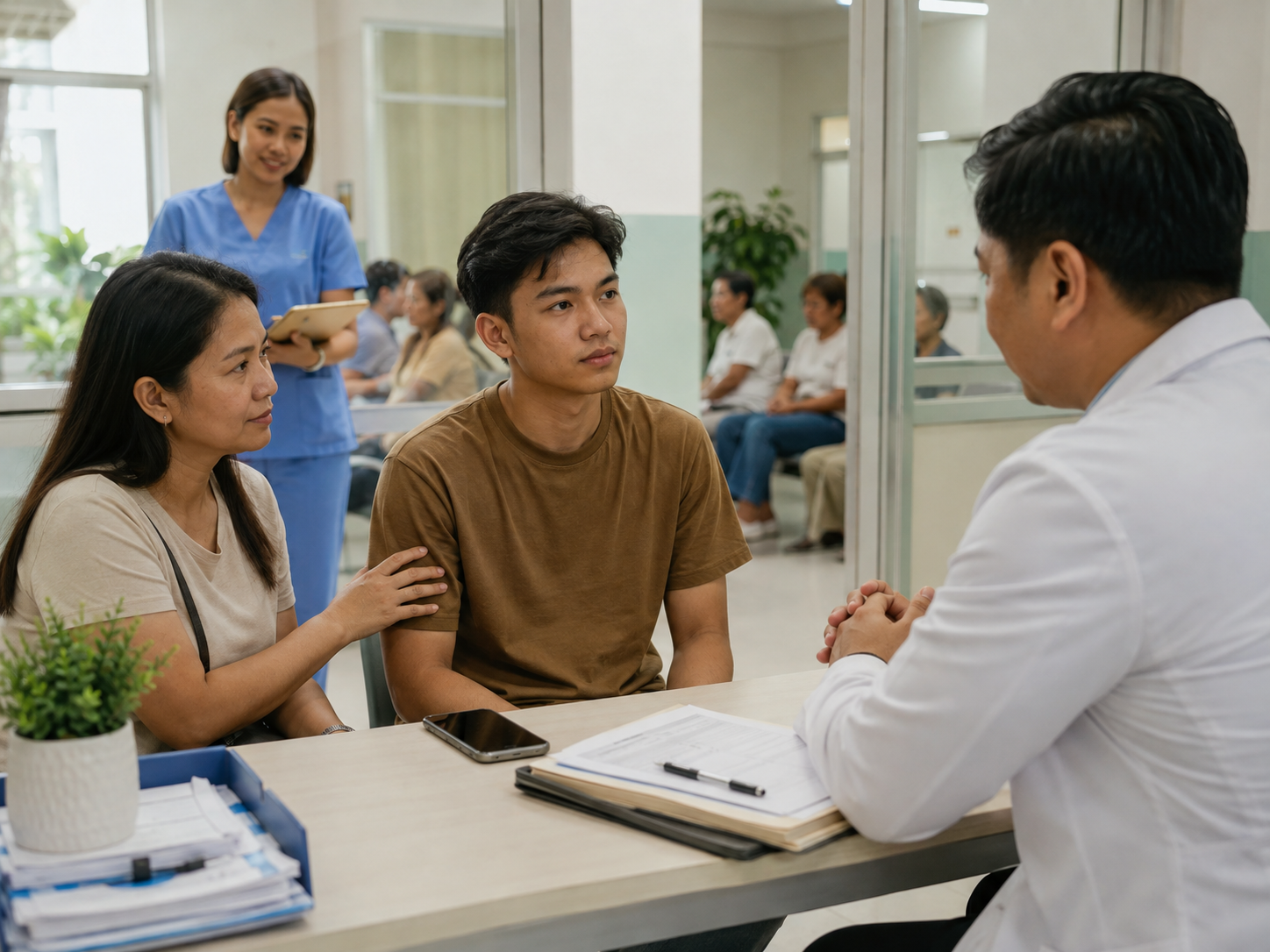
Patients are advised to bring a valid ID, a list of current medications, and previous records from any mental health professional. PhilHealth members should ask if their case qualifies for the mental health package. Many facilities still accommodate walk-ins, but calling ahead can save hours of waiting. During an initial evaluation, the clinician usually asks about sleep, appetite, mood, thoughts of self-harm, and substance use. A trusted family member can be present for support.
The Role of Primary Care and Rural Health Units
The DOH has trained general practitioners and nurses under the Mental Health Gap Action Programme, or mhGAP. This means a rural health unit in a remote barangay can screen for depression, anxiety, and substance use problems, then refer severe cases to a psychiatrist. In 2026, regional medical centers are also using telepsychiatry to bridge the specialist gap. The World Health Organization has long noted that the Philippines has fewer than one psychiatrist per 100,000 people, making primary care vital.
Social Support Beyond the Clinic
After diagnosis, social support strengthens recovery. The Philippine Mental Health Association and local peer groups run support circles for patients and families. Barangay health workers often serve as the first point of contact, helping residents find free counseling or group therapy. These community links matter because stigma and cost still block access to private care.
Reaching a Crisis Hotline
For urgent emotional distress, the NCMH crisis hotline 1553 operates 24/7, with mobile lines 0917-899-USAP (8727) and 989-USAP. Trained responders can provide psychological first aid and direct callers to the nearest facility. MentalHealthPH also maintains an online directory of clinics, hotlines, and support groups.
Public mental health care in the Philippines still has gaps, but clinics, primary care workers, and hotlines now form a more connected safety net. Starting with a barangay health center or a phone call can be the first step toward longer-term support.
About the Author