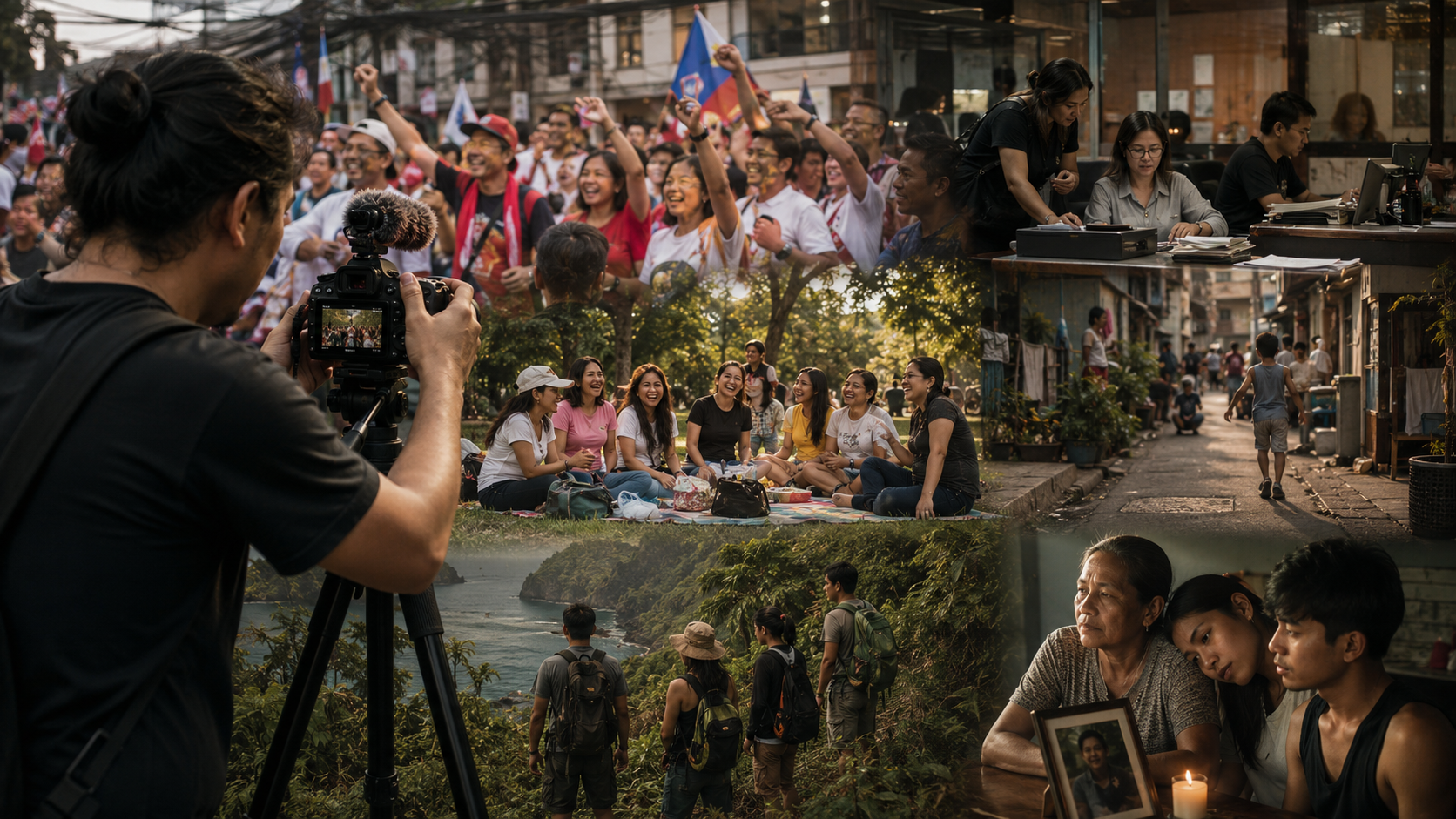
The diversity of Philippine documentary cinema is difficult to understand through a single genre label. Across different generations, Filipino nonfiction filmmakers have examined presidential elections, forced disappearances, overseas labor, environmental conflict, press freedom, poverty, Indigenous communities, and the long shadow of national history.
This range matters because the Philippines is not one story. It is an archipelago of more than 7,000 islands, shaped by regional identities, multiple languages, colonial history, migration, political upheaval, and deep economic inequality. Documentary filmmakers often work where these forces collide.
The result is a body of nonfiction cinema that moves between intimate personal testimony and major national debates.
Political Documentaries Turn Public Events Into Human Stories
Recent Philippine documentaries have shown how political events can be understood through individual experience.
Ramona S. Díaz’s And So It Begins, which premiered at the 2024 Sundance Film Festival, follows the political atmosphere surrounding the 2022 Philippine presidential election. Rather than presenting politics only through statistics or televised debates, the film observes campaign workers, citizens, journalists, and democratic institutions under pressure.
The documentary belongs to a wider tradition that includes Díaz’s A Thousand Cuts, centered on journalist Maria Ressa and the struggle over press freedom.
Another important contemporary case is JL Burgos’s Alipato at Muog. The film investigates the 2007 disappearance of activist Jonas Burgos, the director’s brother. In 2024, the documentary became part of a wider public debate over film classification, censorship, historical memory, and the right of families to seek answers.
These works show why Philippine documentary cinema often functions as a public record. It preserves questions that institutions, politicians, or news cycles may leave unresolved.
From Migrant Workers to Communities Defending Their Land
Political films represent only one part of the landscape.
Sunday Beauty Queen, directed by Baby Ruth Villarama, follows Filipino domestic workers in Hong Kong who organize beauty pageants during their limited free time. The documentary attracted wide attention because it portrayed overseas workers not simply as economic figures, but as women with friendships, ambitions, humor, and complex private lives.
Environmental documentaries provide another distinct perspective. Delikado, directed by Karl Malakunas, follows land defenders in Palawan as they confront threats connected to illegal logging and environmental destruction. Its story links local activism with a global question: who carries the greatest personal risk when natural resources become commercially valuable?
Meanwhile, Alyx Ayn Arumpac’s Aswang examines the human consequences of the Philippine drug war through communities living with fear, death, and uncertainty.
A Century-Long Documentary Culture
The diversity seen today did not appear suddenly. The Philippines has a documentary tradition stretching back roughly a century.
The Daang Dokyu initiative was created to celebrate and examine 100 years of Philippine documentary filmmaking. Its programming highlighted how nonfiction films have chronicled war, dictatorship, social change, cultural identity, and everyday life. More information about this documentary movement can be found through Daang Dokyu.
Digital cameras, streaming platforms, international festivals, and independent production have since expanded the subjects Filipino filmmakers can explore. Yet access remains unequal. Funding, distribution, archival preservation, and theatrical exposure continue to shape which stories reach a wide audience.
Why This Diversity Matters
Philippine documentaries are most powerful when viewed not as a single national narrative, but as competing records of reality.
A migrant worker may describe the country from abroad. An environmental defender may understand it through threatened forests. A filmmaker searching for a missing relative may see history as an unfinished investigation. A journalist may experience democracy through attacks on information.
Together, these perspectives make Philippine documentary cinema one of the most revealing ways to understand the country’s contradictions, resilience, and continuing struggle over who has the power to tell its story.
About the Author