Local Ingredients Are the Heart of Filipino Cooking
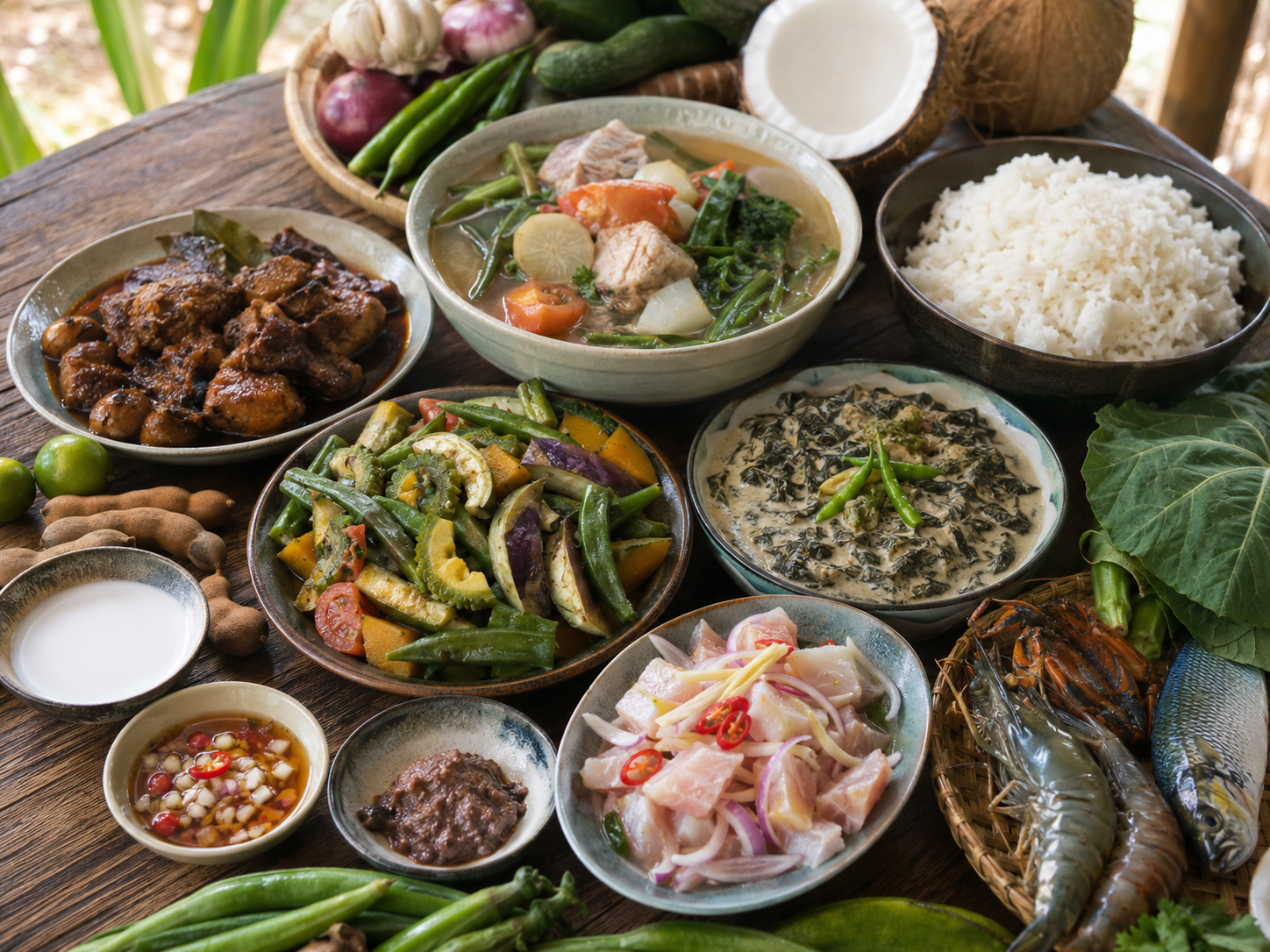
Filipino cuisine is often described through famous dishes such as adobo, sinigang, lechon, and pancit. Yet the real story behind these meals begins with local ingredients: coconut from coastal provinces, calamansi from backyard trees, fresh fish from island communities, rice from farming regions, and vegetables grown in humid tropical soil. These ingredients do more than add flavor. They shape the identity of each dish.
In a 2026 dining context, where travelers and food lovers increasingly look for authentic regional experiences, Filipino cooking stands out because it is deeply tied to place. A bowl of sinigang in Luzon may taste different from one prepared in the Visayas because the souring agent, seafood, and vegetables can change depending on what is available nearby.
For agricultural context, readers can check commodity and regional production data through the Philippine Statistics Authority OpenSTAT portal: https://openstat.psa.gov.ph/. This official database is useful for tracking crops such as rice, coconut, banana, and other products that influence everyday Filipino food.
Coconut: The Ingredient That Defines Island Cooking
From Ginataang Gulay to Laing
Coconut is one of the most important ingredients in Filipino kitchens. Its milk adds richness to dishes like ginataang gulay, where squash, string beans, and shrimp paste are cooked into a creamy vegetable stew. In Bicol, coconut milk becomes even more powerful in laing, a dish made with dried taro leaves, chili, aromatics, and sometimes pork or seafood.
The appeal of coconut-based dishes lies in balance. Coconut milk softens heat, carries savory flavors, and creates a luxurious texture without needing imported dairy. This makes it a perfect example of how local ingredients can produce depth and comfort.
Calamansi, Vinegar, and the Filipino Taste for Brightness
Why Sourness Matters
Filipino dishes often rely on acidity. Calamansi, native-style vinegars, tamarind, and green mango bring a sharp brightness that cuts through rich meat and seafood. Sinigang uses sourness as its main personality, while kinilaw, often compared to ceviche, uses vinegar and citrus to “cook” raw fish.
This taste for sourness is not accidental. In a tropical country, acidity helps preserve food, refresh the palate, and balance salty condiments such as fish sauce and shrimp paste.
Seafood and Rice: A Practical Island Partnership
Everyday Food With Regional Character
As an archipelago, the Philippines naturally builds many meals around fish, shellfish, and rice. Grilled bangus, paksiw na isda, and seafood sinigang reflect the everyday relationship between coastal communities and the sea. Rice then becomes the anchor, absorbing sauces, broths, and oils.
This practical pairing also explains why Filipino food feels generous and communal. Dishes are rarely designed to stand alone; they are meant to be eaten with rice, shared at the table, and adjusted with dipping sauces.
Why Local Filipino Dishes Appeal to Modern Diners
The global interest in Filipino cuisine is growing because these dishes feel both familiar and surprising. They offer comfort through stews, grilled meats, and rice meals, but they also introduce unique flavors from calamansi, coconut vinegar, banana blossom, taro leaves, and fermented seafood.
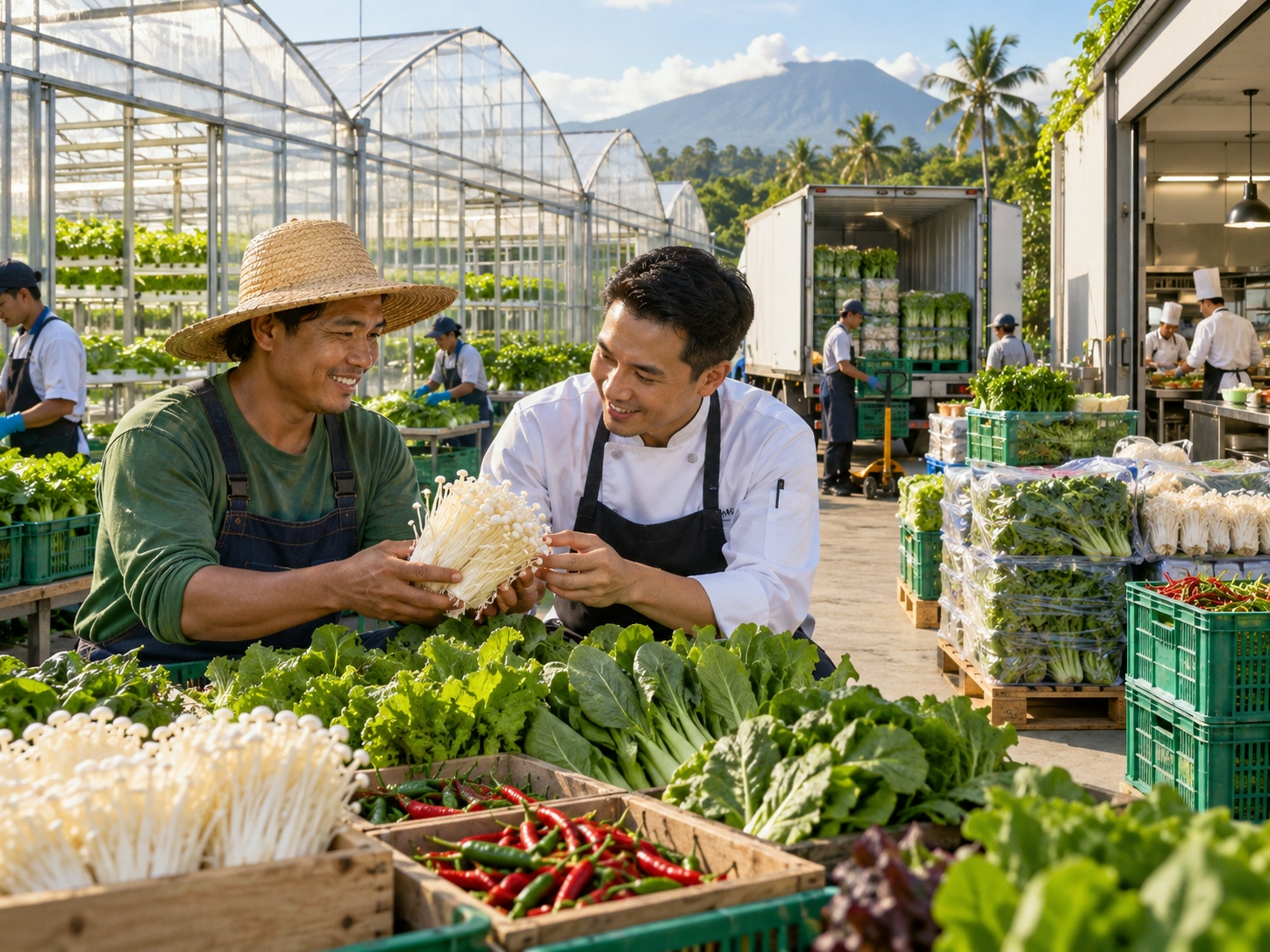
For restaurants, food writers, and home cooks, the strongest angle is authenticity. Filipino cuisine becomes more compelling when it is presented not simply as a list of recipes, but as a living food system built from farms, islands, markets, and family kitchens.
About the Author