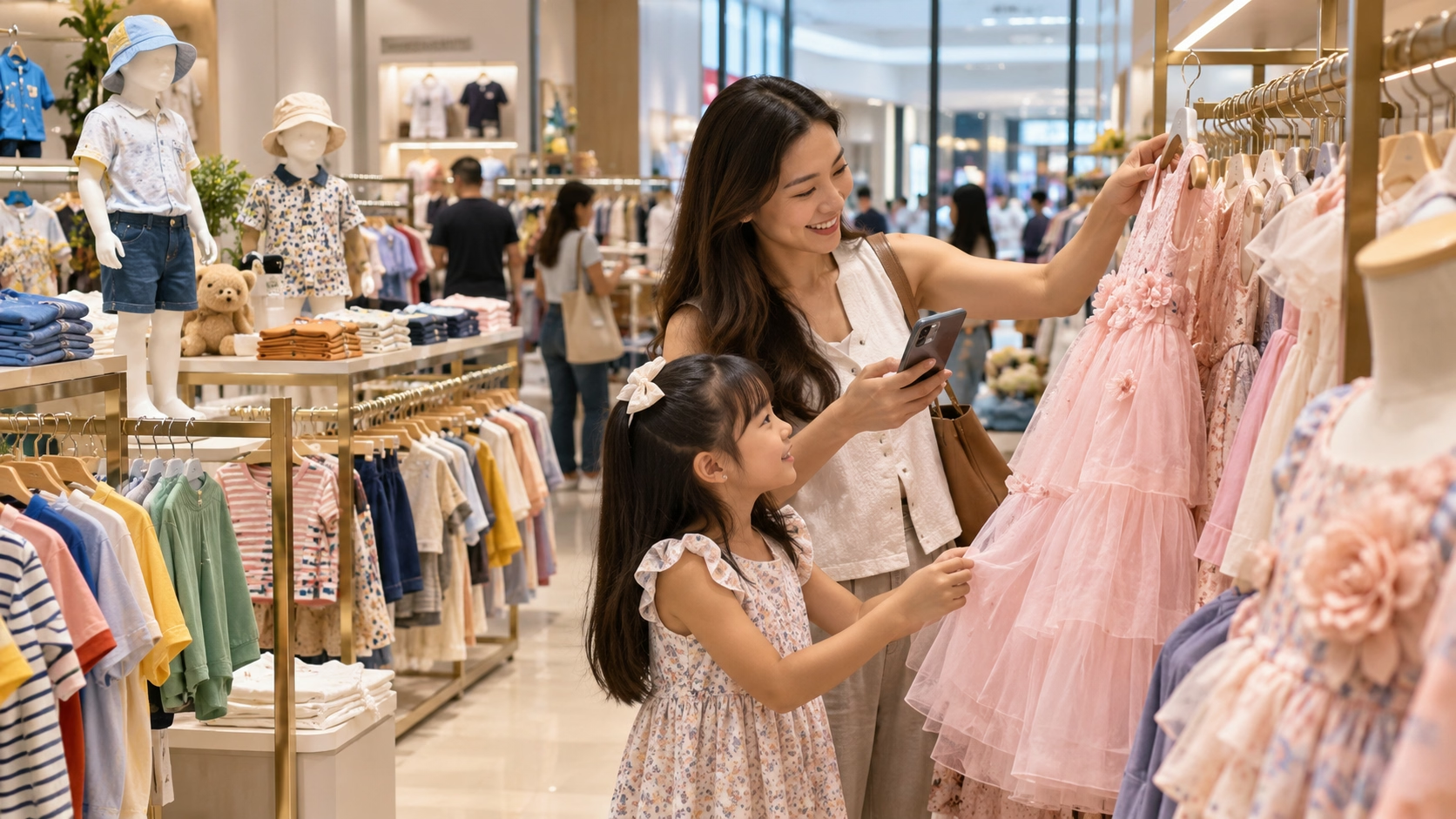
Children’s fashion in the Philippines is shaped by a lively mix of heritage, family celebrations, and a tropical climate that demands comfort. What makes it especially inspiring is how Filipino families blend tradition with modern practicality—creating outfits that feel meaningful without being stiff or overly formal.
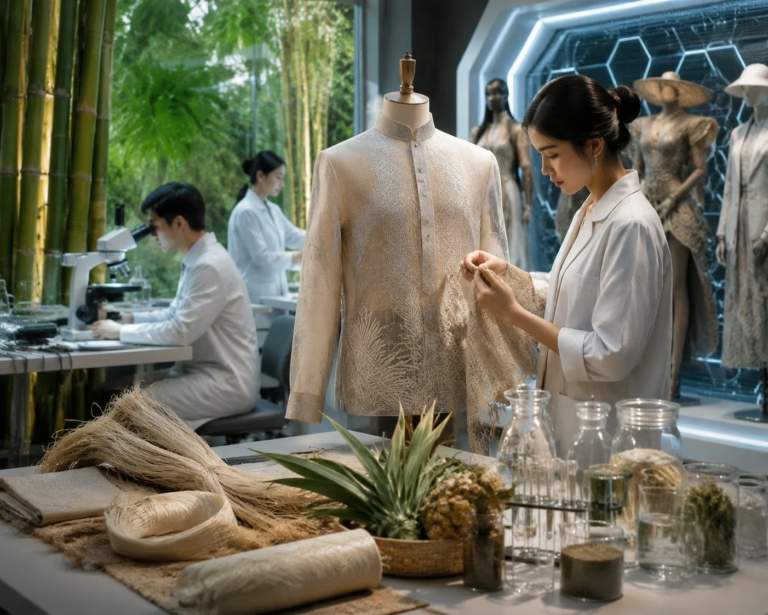
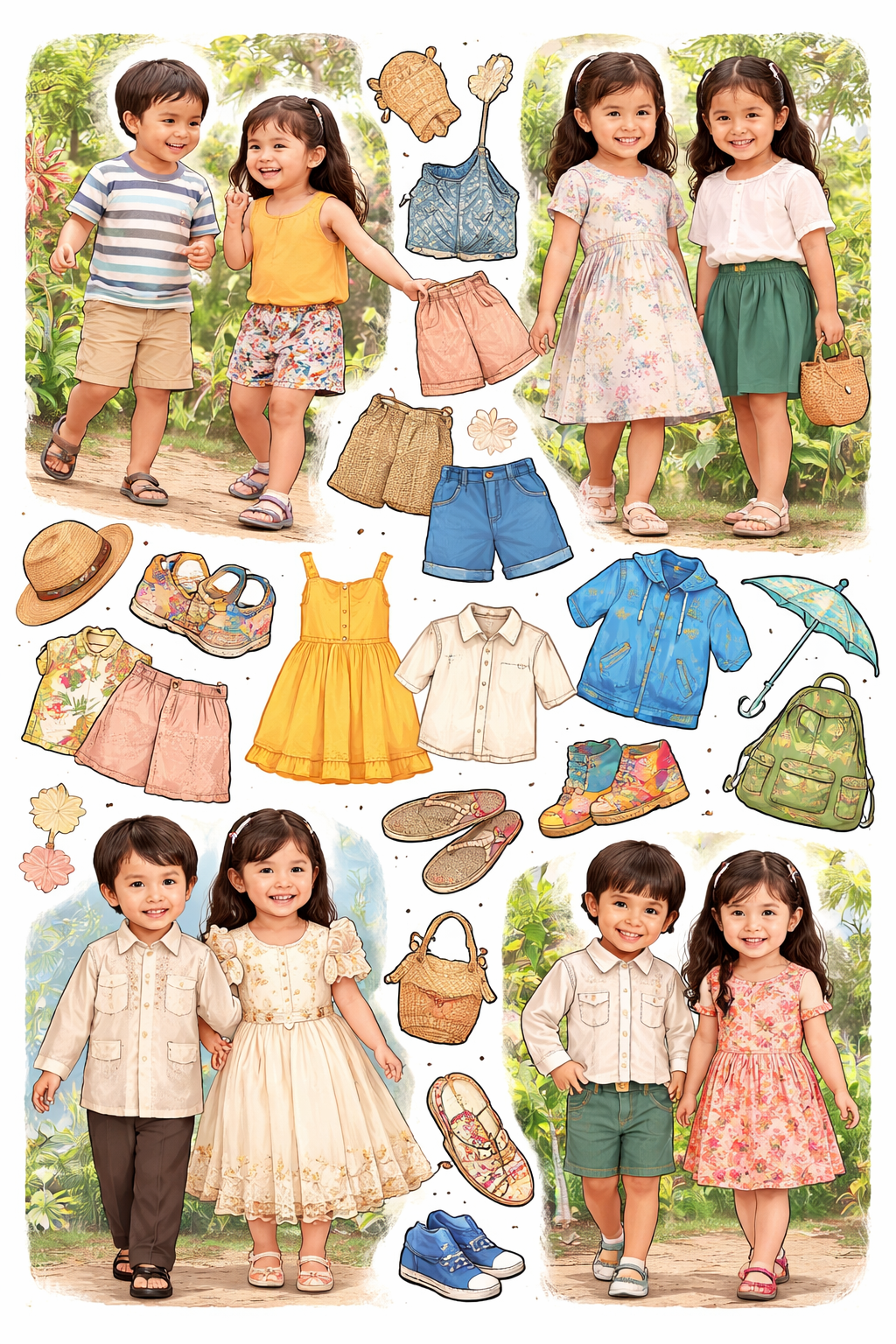
A major influence comes from Filipino traditional clothing, often introduced early in life during school events, fiestas, weddings, and cultural programs. For boys, the barong Tagalog—a lightweight formal shirt—has kid-friendly versions made in softer fabrics that breathe well. It is commonly paired with dark trousers and simple shoes, presenting a polished look that still allows movement. For girls, variations of the terno or baro’t saya inspire party dresses with butterfly sleeves, delicate embroidery, and graceful silhouettes. These designs aren’t only about appearance; they connect children to family history and national identity.
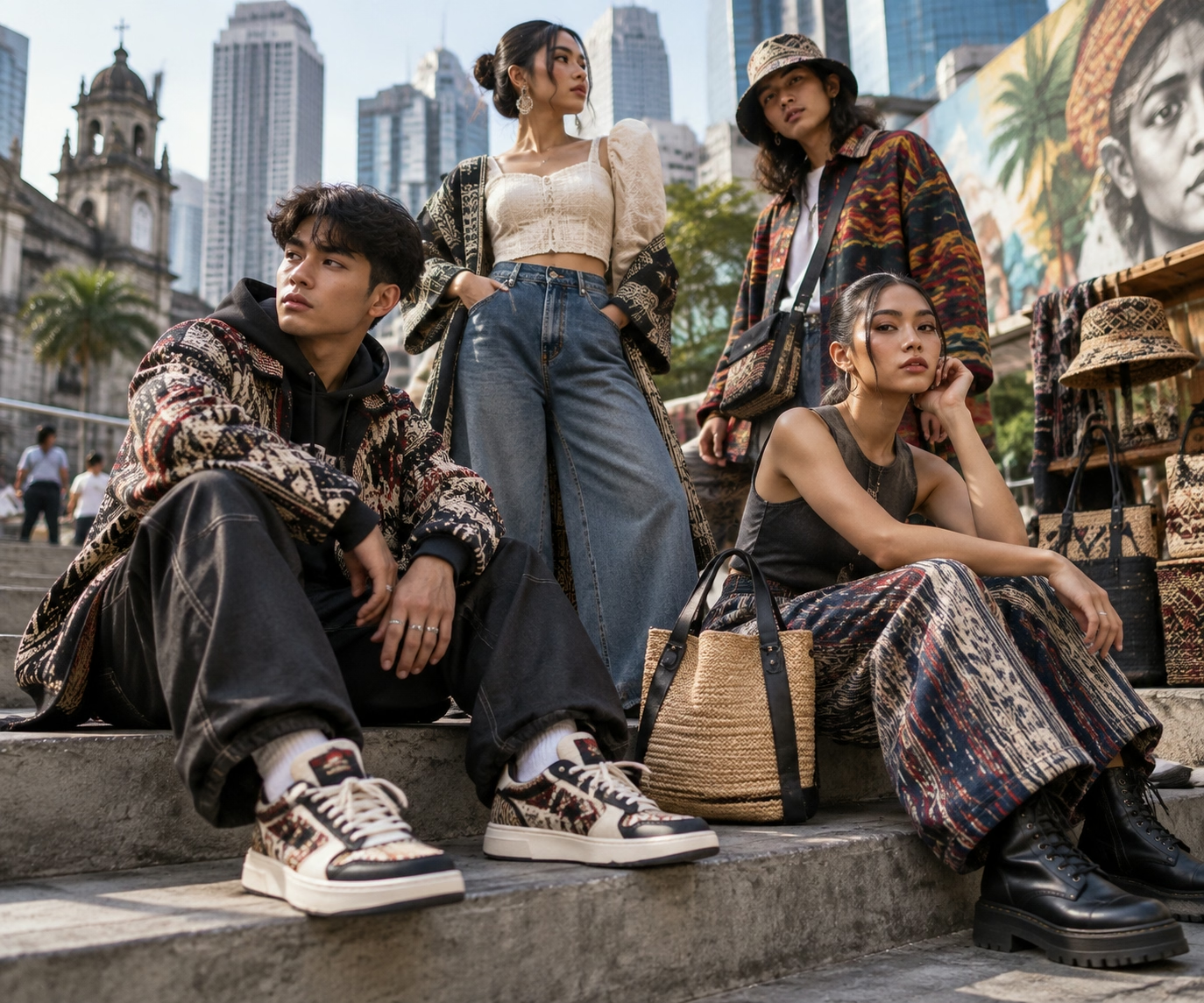
Textiles are another powerful source of inspiration. The Philippines has a rich weaving tradition across regions, and even simplified “modern” children’s outfits borrow motifs from local patterns. Parents may choose garments featuring geometric prints inspired by weaving, or accessories—like small bags or sashes—that echo traditional craftsmanship. While authentic heritage fabrics can be delicate or pricey, modern interpretations offer the look and story in a more child-proof way.
Because the Philippines is warm and humid much of the year, breathable construction is central to children’s fashion. Cotton, linen blends, and lightweight knits are popular for daily wear. You’ll often see loose tops, airy dresses, and shorts designed for play and school errands. The goal is easy movement: garments that handle running, sitting on floors, and spontaneous games. This is why Filipino children’s style frequently feels relaxed even when it’s colorful or dressy.
Filipino celebrations also shape what kids wear. Festivals and family gatherings encourage bolder choices: bright colors, coordinated family outfits, and statement accessories. During the holiday season, kids might wear coordinated sets in festive reds or greens, while town fiestas inspire floral patterns and cheerful palettes. This “event dressing” culture makes children’s fashion feel joyful and expressive, rather than limited to neutral basics.
Modern Filipino kids’ style is also influenced by global trends—streetwear, sporty sets, sneakers—but it is often adapted to local needs. Matching sets in soft fabric, sandals or easy-on sneakers, and sun-friendly hats are common. Many parents prioritize mix-and-match wardrobes: a few standout tops, comfortable bottoms, and one or two special pieces that can be reused for multiple occasions.
What truly makes Filipino children’s fashion inspiring is the balance: respect for tradition, love of celebration, and a practical approach to comfort. It’s fashion that tells a story, fits the weather, and still lets a child be a child—active, playful, and bright.
About the Author