In the Philippines, workplace attire reflects a unique blend of tradition, professionalism, and modern style. As one of the fastest-growing economies in Southeast Asia, the country maintains a diverse professional environment influenced by both Western and Asian cultures. Whether you are a local employee or an expatriate, understanding the dress code norms is essential for establishing respect and professionalism in the workplace.
The general approach to professional attire in the Philippines can vary depending on the industry and the company’s culture. However, most Filipino workplaces tend to lean toward business casual attire, with a touch of formality for those in more conservative fields such as law, finance, and government.
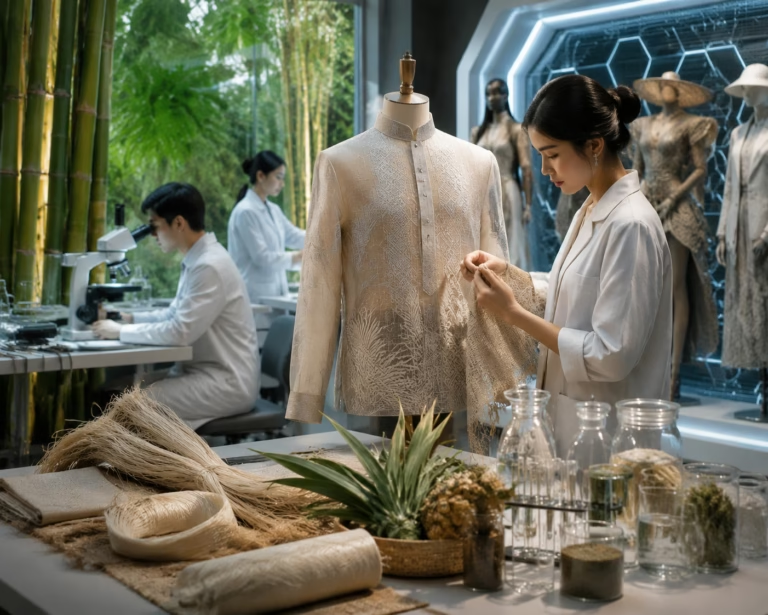
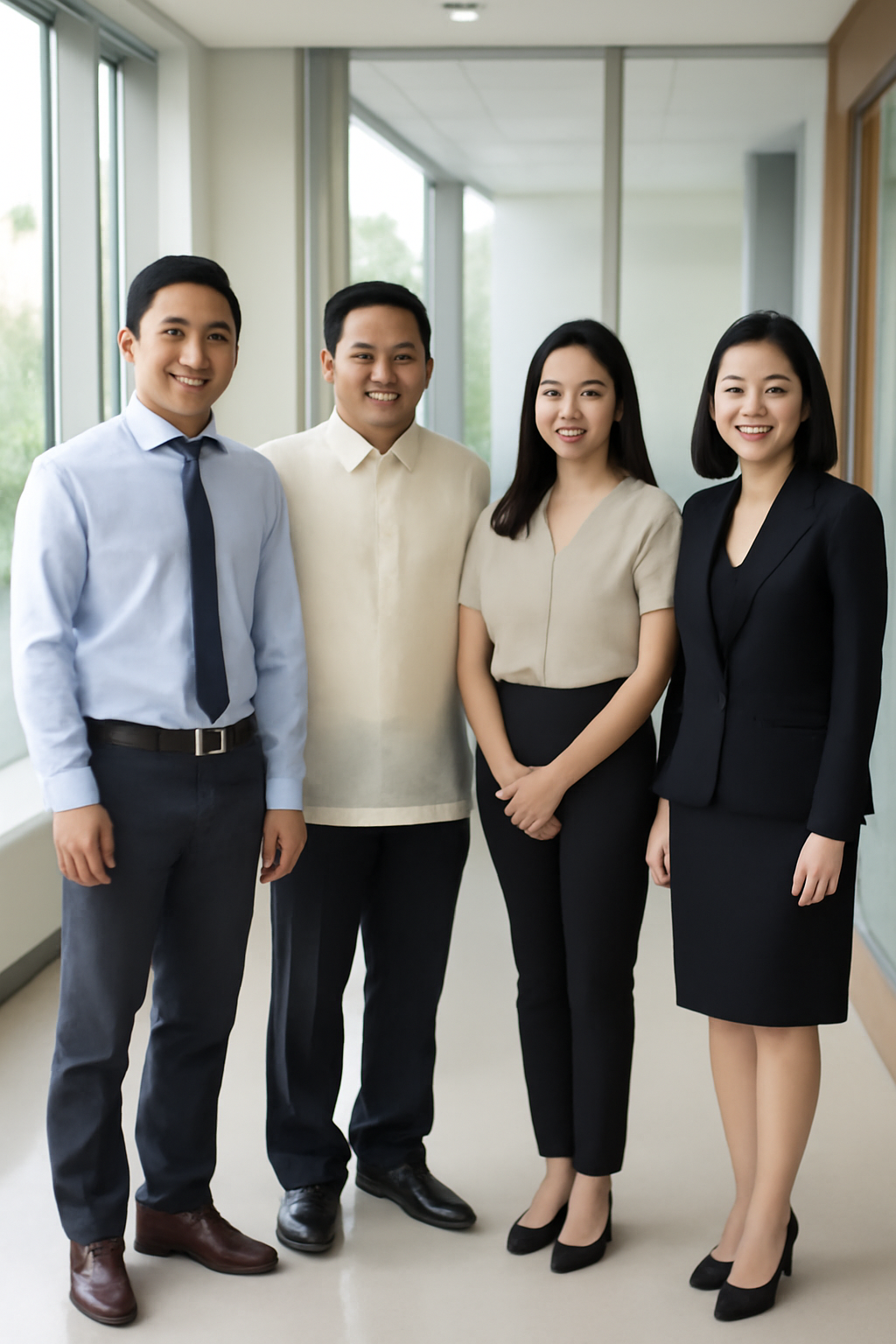
For men, the traditional attire for formal workplaces often includes dress shirts paired with slacks. The dress shirt can be long-sleeved, though short sleeves are generally acceptable in more casual settings, especially during the hot months. In certain industries, the barong Tagalog, a traditional Filipino garment made from light, breathable fabrics like piña or jusi, is still worn. The barong is often worn for formal events, corporate meetings, or national holidays. Suits are typically worn for important meetings or events, but in daily office life, a simple shirt with slacks suffices.
Women in the Philippines also enjoy a degree of flexibility in their professional wardrobe. Many women opt for blouses, dresses, and skirts that maintain a professional appearance while offering comfort. Like their male counterparts, women may choose to wear traditional Filipino garments, such as the “baro’t saya” or the “terno,” especially in formal or cultural settings. However, most modern office environments embrace business casual attire, where modest yet stylish pieces like blouses, cardigans, and pencil skirts are common choices. In more corporate settings, women may wear tailored suits with skirts or pants, but it’s important to remember that the local climate can influence fabric choices – light, breathable materials such as cotton, linen, and silk are often preferred.
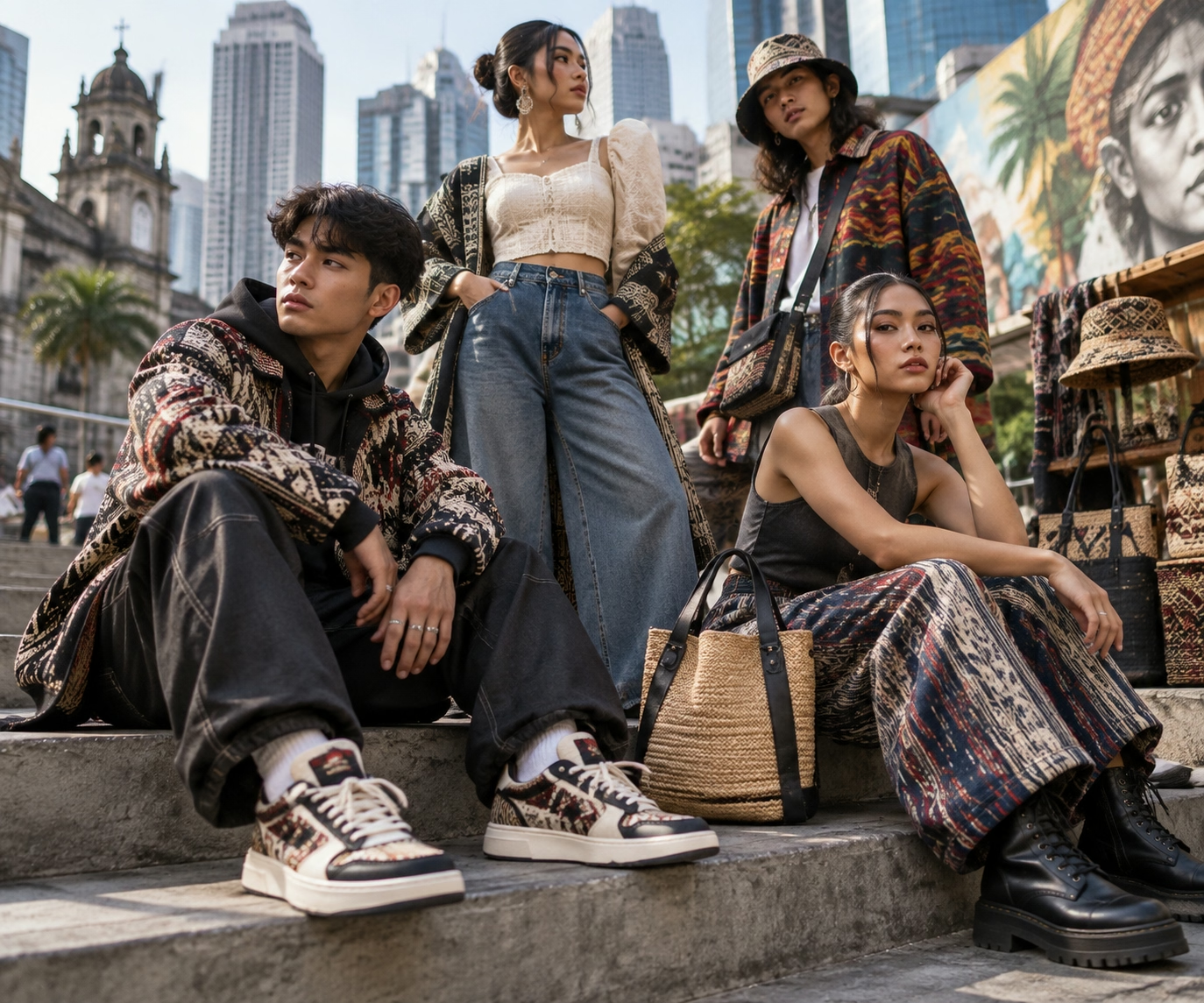
The Filipino climate plays a significant role in the choice of workplace attire. The country’s tropical climate means temperatures are high for most of the year, leading employees to opt for clothing that is lightweight and breathable. That said, it’s important to strike a balance between comfort and professionalism. Bright, bold colors and flashy patterns are generally discouraged in conservative workplaces, as they may detract from a more polished, businesslike appearance. Neutral tones like navy, black, gray, and beige dominate the professional wardrobe in the Philippines.
Despite the relatively relaxed business attire in many sectors, certain industries such as banking, law, or corporate firms in Manila still expect employees to adhere to a more formal dress code. In these industries, employees often opt for suits or formal dresses, especially during business meetings or client interactions. Additionally, accessories play an important role in completing the professional look. A conservative watch, minimalistic jewelry, and professional footwear are common among Filipino professionals.
In the modern workplace, flexibility is key. With the rise of remote work and hybrid office setups, employees now have more leeway in terms of attire, but it is always recommended to maintain a professional appearance, especially during virtual meetings. While casual wear like polos or basic tees may be acceptable in some informal workplaces, employees are still expected to look neat and put-together.
To sum up, workplace attire in the Philippines is a mix of traditional and modern styles. Employees are expected to balance comfort and professionalism while considering the cultural, environmental, and industry-specific expectations. Ultimately, dressing appropriately for work in the Philippines is about maintaining respect for the workplace while ensuring personal comfort in a tropical environment.
About the Author