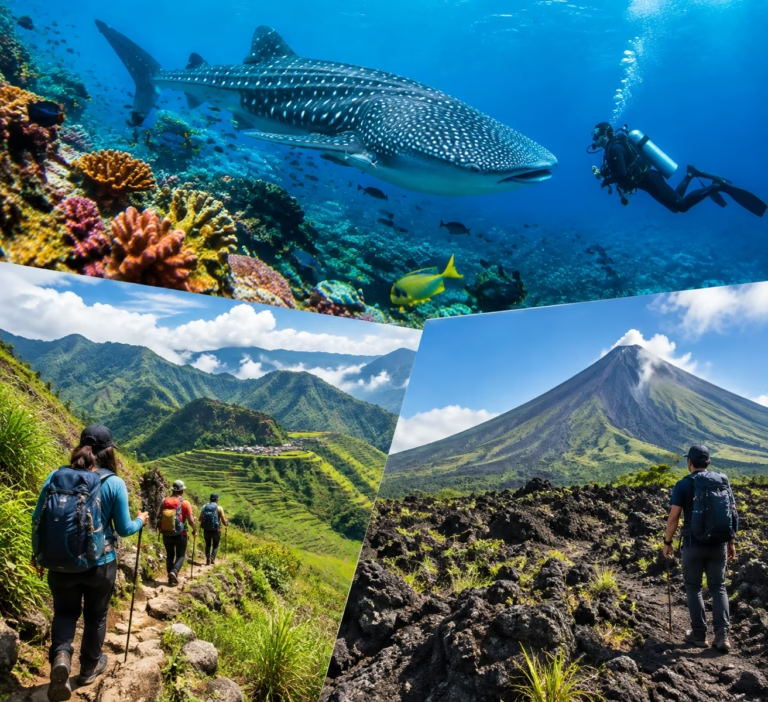
With more than seven thousand islands scattered across the Pacific, the Philippines is a dream destination for travelers who crave both saltwater thrills and mountain challenges. This island nation combines vibrant marine life, dramatic limestone cliffs, and emerald peaks into one vast adventure playground where you can dive in the morning and hike above the clouds the next day.
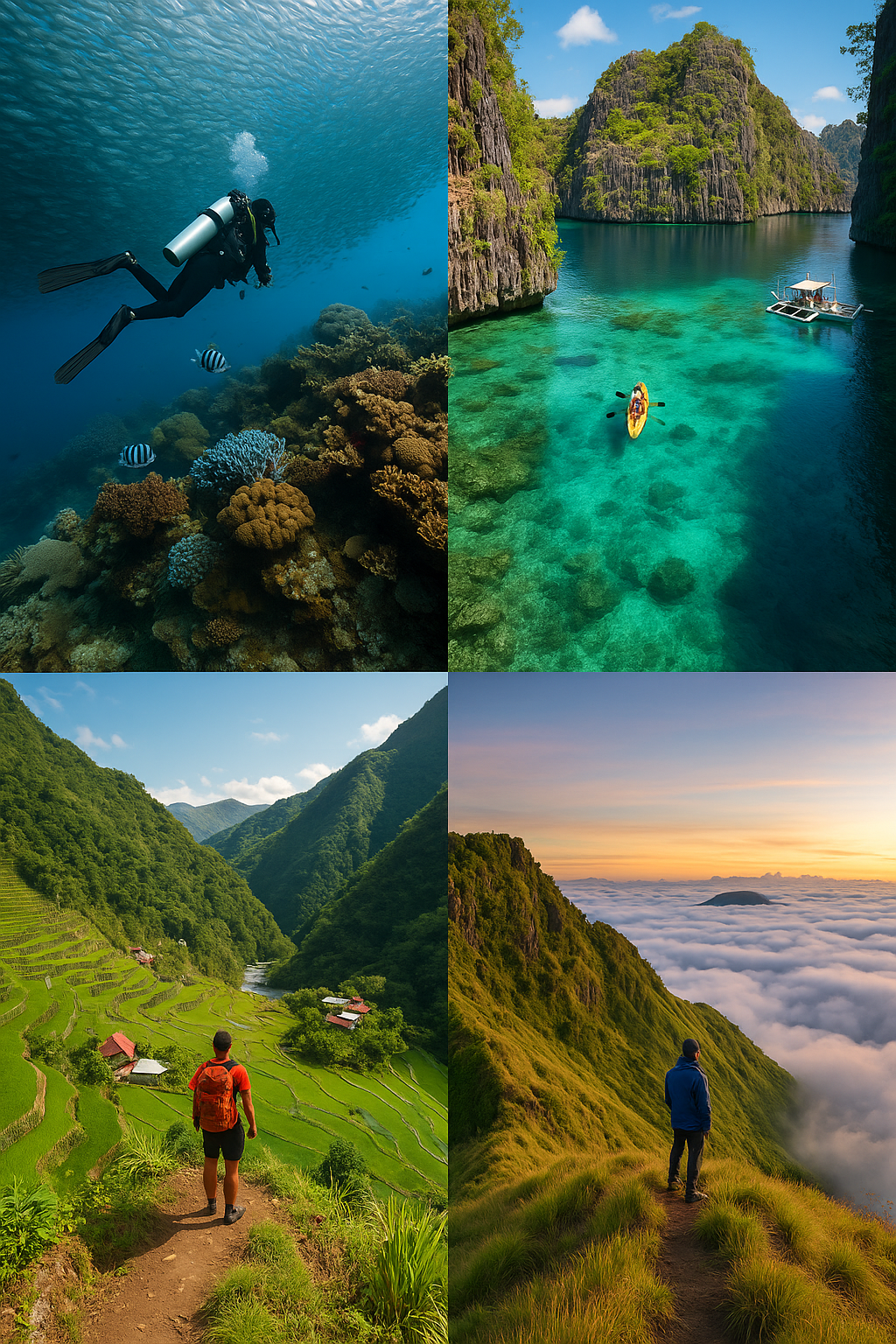
For ocean lovers, the Philippines offers some of the most diverse underwater experiences in Southeast Asia. Scuba divers and snorkelers flock to places like Tubbataha Reefs Natural Park and Apo Reef, where coral gardens are teeming with turtles, reef sharks, and schools of colorful fish. In Coron, shipwreck diving adds a historical twist to your underwater exploration, with Japanese World War II wrecks now transformed into artificial reefs thriving with marine life.
Those who prefer to stay closer to the surface can enjoy iconic island-hopping trips in Palawan, especially around El Nido and Coron. Limestone karsts rise dramatically from turquoise lagoons, and kayaking through hidden coves feels like entering a secret world. Over in Cebu, snorkelers can witness the famous sardine run in Moalboal, where millions of fish move like a shimmering wall just a few meters from the shore.
Surfing adds another dimension to sea-based adventures. Siargao, known as the surfing capital of the Philippines, is home to the legendary Cloud 9 break and a host of more forgiving waves for beginners. Beyond surfing, Siargao also offers paddleboarding through mangroves and trips to nearby sandbars and lagoons that blend relaxation with exploration.
Once you head inland, a different kind of adventure stirs. The Cordillera Mountains in Northern Luzon invite trekkers to wander through ancient rice terraces in Banaue and Batad, often called “stairways to the sky.” Multi-day hikes can combine village homestays, cool mountain air, and sunrise views that make the uphill climbs worthwhile. Nearby Sagada is famous for its hanging coffins, cave systems, and opportunities for spelunking and canyoning.
Further south, experienced hikers often set their sights on Mt. Pulag, known for its “sea of clouds,” or Mt. Apo, the highest peak in the country, located in Mindanao. These treks require better preparation and a higher fitness level, but the reward comes in the form of panoramic vistas, mossy forests, and the sense of accomplishment that comes with standing on a summit.
Adventure in the Philippines is not limited to adrenaline; it is intertwined with local culture and everyday life. Staying with host families in mountain villages, sampling dishes like adobo or fresh seafood after a long day outdoors, and listening to stories from local guides all add depth to the experience. These interactions transform a trip into something more meaningful than just ticking off activities.
To make the most of an adventure-focused trip, timing and planning are crucial. The dry season, roughly from November to May, generally offers calmer seas and more reliable trekking conditions. Hiring trained local guides, checking weather updates, and choosing responsible tour operators help keep activities safe and sustainable. Simple choices—such as avoiding single-use plastics, respecting wildlife, and staying on marked trails—help preserve the fragile environments you came to enjoy.
Whether you’re descending into a cool mountain valley or jumping off a boat into crystalline water, the Philippines invites you to engage with nature in dynamic ways. Sea and mountain adventures blend seamlessly here, creating a destination where every day can bring a new challenge and a new story to tell.
About the Author