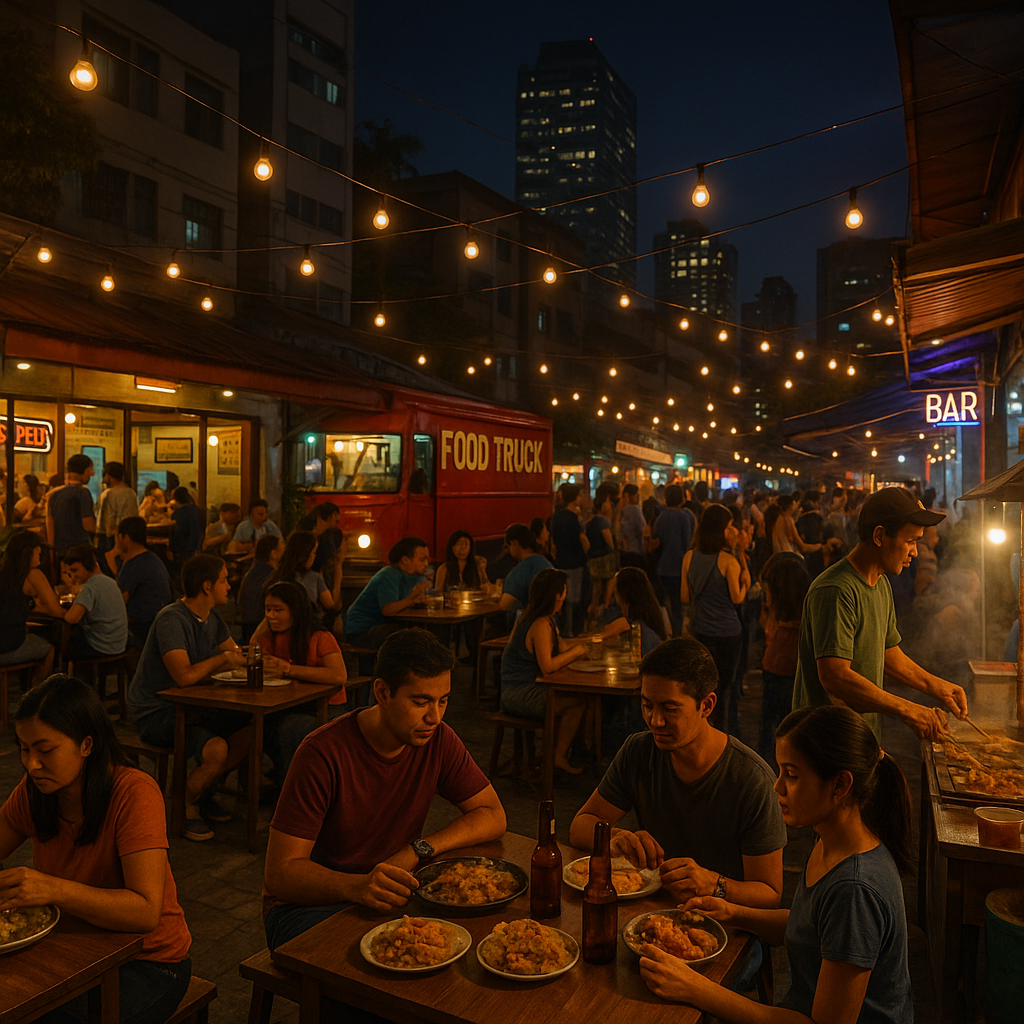
When the sun goes down in the Philippines, the big cities do not quiet down—they shift gears. Neon signs switch on, food stalls start sizzling, and the streets fill with people looking for something good to eat after a long day. Nightlife and food are tightly linked in Filipino urban culture, especially in places like Manila, Cebu, and Davao.
In Manila, several neighborhoods stand out as after-dark food magnets. Areas such as Poblacion in Makati and Bonifacio Global City (BGC) offer a mix of casual eateries, rooftop bars, and late-night food stalls. You can move from a laid-back carinderia serving home-style dishes to a stylish gastropub offering creative takes on Filipino classics in just a few steps.
Street food is often the first thing visitors notice. Skewers of isaw (grilled chicken intestines), dugo-dugo (coagulated blood), and barbecue pork are grilled over open charcoal, filling the air with smoky aromas. These stalls usually appear near busy intersections, transport terminals, and university areas, where students and workers gather for a cheap but satisfying bite.
For a slightly more organized experience, night markets are a great choice. In some cities, weekend markets or pop-up night bazaars feature rows of food booths selling everything from crispy lechon belly to Japanese-style takoyaki adapted to local tastes. These markets usually come with live music, shared tables, and a lively, communal atmosphere.
No discussion of Filipino nightlife food is complete without mentioning pulutan, the small dishes paired with beer or cocktails. Popular pulutan include sizzling sisig, crispy pata, and grilled squid. These plates are meant to be shared, encouraging long conversations and laughter that stretch late into the night.
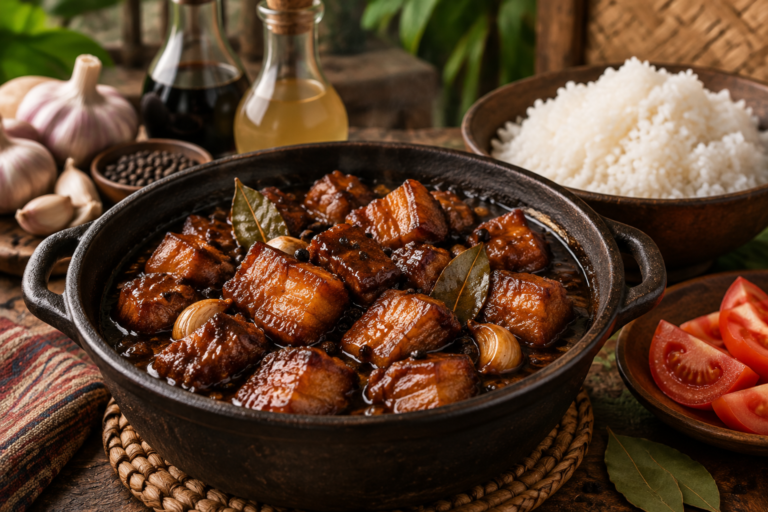
Many modern Filipino restaurants now blend traditional recipes with global influences. You might find adobo flavored with cocoa, sinigang reimagined as a pasta dish, or halo-halo served in a minimalist, fine-dining style. These venues, often located in commercial centers and business districts, cater to young professionals who want both comfort food and something a bit experimental.
Desserts also play a big role in the evening routine. After bar-hopping or strolling through the city, people often cool down with halo-halo, leche flan, or turon from small roadside stands. Milk tea shops and local cafés stay open late, offering sweet drinks and pastries as a gentler way to end the night.
Safety and convenience shape how people eat after dark. Malls with extended hours have become popular spots for families and groups who want air-conditioned comfort, security, and a wide range of food choices in one place. Food courts might not look glamorous, but they often hide hidden gems serving regional specialties from across the archipelago.
Ultimately, Filipino city nightlife is not just about drinking or dancing; it is about gathering around a table, plastic stool, or street curb to share food. Whether you are snacking on skewers under a streetlamp or trying a chef’s modern twist on kare-kare, the city offers endless flavors to explore after dark.
About the Author