
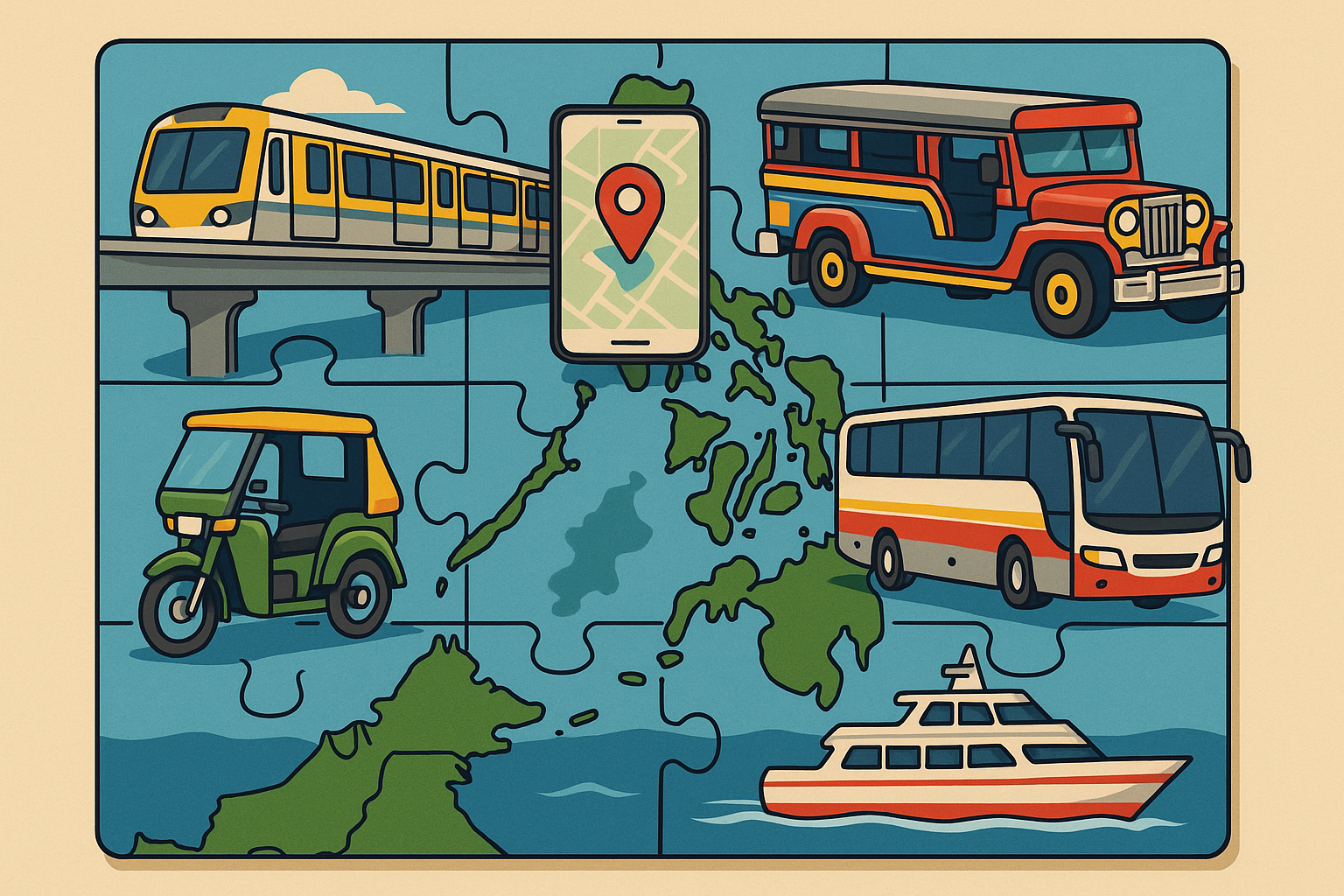
The Philippines offers an eclectic transport network shaped by its 7,000+ islands, bustling cities, and laid-back provinces. Understanding your options—and when to use each—will make your trip smoother and more budget-friendly.
In Metro Manila and other large cities, jeepneys are the most iconic way to get around. These colorful, fixed-route minibuses are affordable, but they can be crowded and require a bit of confidence: routes are painted on the sides, and you’ll call out “para” to stop. Keep small bills handy. Tricycles (motorbikes with sidecars) are ideal for short distances in towns and suburban neighborhoods; always confirm the fare before hopping in, and expect higher rates at night or in tourist zones.
For intercity travel, buses are reliable and surprisingly comfortable on major corridors like Manila–Baguio or Cebu–Moalboal. Provincial buses often offer air-conditioning and assigned seats; book online where available. In Manila, the LRT and MRT lines cut through heavy traffic—buy a reloadable Beep card to speed up transactions. Expect peak-hour crowds (roughly 7–9 a.m. and 5–8 p.m.). The PNR (commuter rail) is expanding but still limited; check current service before relying on it.
Because this is an archipelago, ferries are a backbone of travel. Fast crafts such as OceanJet connect nearby islands (e.g., Cebu to Bohol), while larger overnight vessels like 2GO carry passengers and luggage between major ports. Reserve early on weekends and holidays, and keep an eye on weather advisories during typhoon season (roughly June to November), when cancellations can cascade.
Ride-hailing apps—most commonly Grab—are a simple way to avoid haggling and ensure clear drop-off locations. In Manila, you’ll also see TNVS (transport network vehicles) and bikers like Angkas for quick solo rides. Taxis are plentiful but ask the driver to use the meter or agree on a fare beforehand; at airports, coupon taxis and official queues reduce hassle.
Payment is still largely cash-based, so carry small denominations. In cities, e-wallets like GCash and Maya are widely used, but don’t assume acceptance outside urban centers. For local transit, the Beep card works on many trains and some buses. Luggage space is limited on jeepneys, trikes, and vans (UV Express), so pack flexible bags, not hard suitcases, for easier stowing.
Safety is mostly common sense: keep phones and wallets secure, avoid showing valuables, and use well-lit transport at night. Women travelers often prefer ride-hailing or reputable buses after dark. In crowded terminals, watch for bag-lifting. If a deal sounds too good—whether “special” boat transfers or “express” rides—verify with your hotel or tourism desk.
Finally, factor in time. Metro traffic is unpredictable; add an hour buffer for airport runs. NAIA has multiple terminals—double-check yours, as transfers can be slow. Learn simple phrases (“Magkano po?” for “How much?”) and expect English to be widely understood. With a little planning, the Philippines’ mix of land, sea, and app-based options becomes an enjoyable part of the journey.
About the Author